You could be running the same Meta campaigns, targeting the same audiences and working with the same budget, while new platform features create opportunities your competitors are already testing. That’s what makes the Meta Ads updates in September 2026 worth paying attention to.
This month’s developments cover creator marketing, Threads advertising, AI-assisted business workflows, and click-to-WhatsApp messaging. Each change affects a different part of campaign planning and execution, from discovering creator content to evaluating new advertising channels.
For media buyers, the real value lies in understanding what has changed, which accounts can access the features, and where testing makes sense. Here’s a breakdown of the latest updates, their practical implications, and the steps advertisers should consider before changing their campaigns.
Meta Ads Updates in September 2026: At a Glance
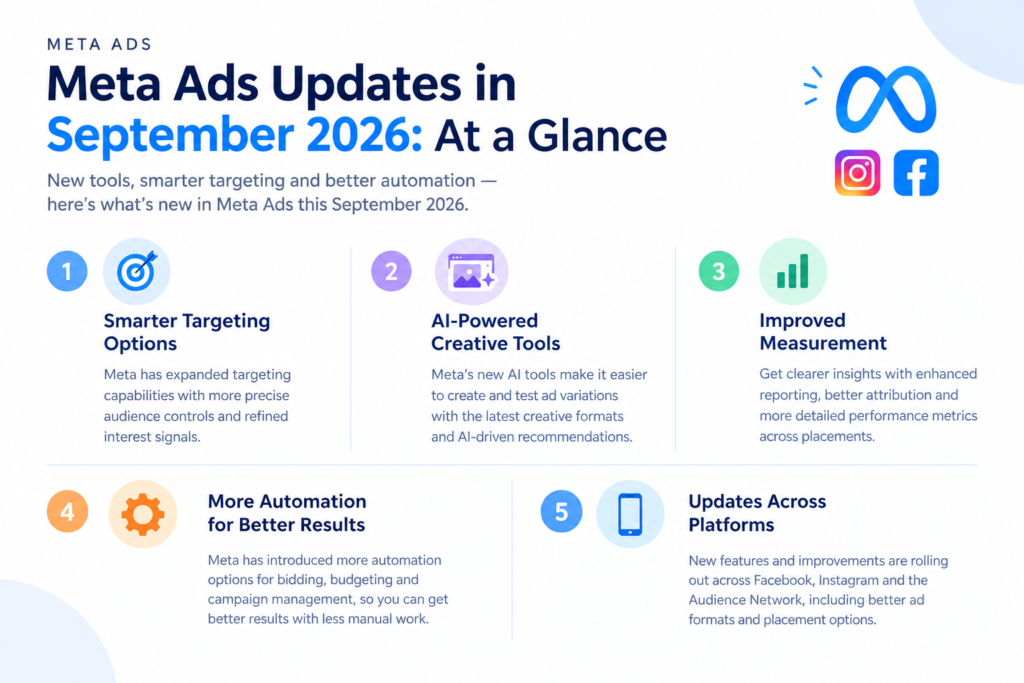
September’s Meta advertising updates cover more than new features. They also give advertisers reasons to review existing workflows, account permissions, and campaign measurement.
| Update | Why it matters |
| Creator Marketing Hub expansion | Makes creator discovery and ad preparation easier to manage |
| Threads advertising changes | Gives eligible businesses more flexibility when setting up Threads ads |
| Meta AI business tools | Supports campaign preparation and connected business workflows |
| Click-to-WhatsApp changes | May influence lead follow-up and messaging cost calculations |
| Partnership Ads developments | Helps advertisers review creator permissions and campaign workflows |
These updates serve different purposes, so their relevance depends on your campaign objectives and current setup. Availability can vary by account, eligibility, and rollout stage. Use this overview as a quick reference, then review the individual changes before deciding what to test.
1. Creator Marketing Hub and Partnership Ads Updates
What Changed?
Meta’s September creator marketing developments focus on making it easier for advertisers to discover creators, evaluate potential partnerships, and prepare creator-led advertising. Enhancements to the Creator Marketing Hub bring creator discovery and recommendations into a more connected workflow, helping brands identify creators whose content and audiences fit their campaign objectives.
Content permissions are another important part of the process. Before creator content can be used in advertising, brands need the appropriate authorisation. A more streamlined workflow can help teams coordinate creator selection, permissions, and ad preparation with greater clarity.
Partnership Ads remain relevant for brands that want to advertise using eligible creator content. Meta is also developing connections between advertising workflows and AI-agent capabilities, although advertisers should verify which specific features are currently supported.
These developments matter because creator marketing involves more than finding a popular account. Audience relevance, content suitability, permissions, and campaign performance all influence whether a partnership contributes to business goals. Check the Meta Newsroom for the official announcement and feature-specific details.
What Should Media Buyers Do?
Review how your team discovers and shortlists creators. Look beyond follower counts to audience fit, content quality, engagement patterns, and the purpose of the campaign. Confirm content usage permissions before launch and ensure every creative is ready for advertising.
Then compare creator-led ads with existing campaign creative using consistent metrics, such as cost per qualified lead, conversion rate, and return on ad spend. This gives you a clearer picture of the formats that contribute to results.
If your team is reviewing its campaign approach, explore Gravitas Consulting’s paid advertising services for support with paid campaign planning and execution.
2. Threads Ads No Longer Require a Matching Instagram Identity
What Changed?
Meta’s September 2026 rollout brings greater flexibility to Threads advertising. Matching usernames between Threads and Instagram profiles are no longer required, making it easier for businesses to manage their presence across the two platforms.
Eligible businesses without an Instagram profile can also advertise directly through their Threads profile. This opens another route for brands looking to reach audiences on Threads without building their advertising setup around a matching Instagram identity.
Business portfolio requirements still apply, and availability may vary as the rollout progresses. Advertisers should check profile access, permissions, and eligibility before planning a campaign. Meta’s Threads profile access guidance provides the relevant requirements.
What Should Media Buyers Do?
Start by evaluating Threads against your existing channel mix. Consider whether your audience uses the platform, whether your creative fits its environment, and whether its available advertising options support your campaign objective.
Before launch, confirm business portfolio access and the permissions needed to manage the profile and campaign. Then run a controlled test with a defined objective and budget. Compare performance using relevant metrics, including reach, engagement, qualified conversions, and acquisition costs.
The goal is to determine whether Threads adds value to your media mix before you commit a significant share of your budget. Businesses reviewing their broader channel strategy can explore Gravitas Consulting’s social media marketing services.
Meta AI Tools for Business and Campaign Workflows
What Changed?
Meta announced Muse for Small Business on September 29, 2026. The tool connects with supported business applications and Facebook and Instagram business accounts, allowing it to work with relevant business context and assist with tasks across connected workflows.
For advertisers, this development is worth watching because campaign preparation often involves information spread across multiple tools. Depending on the integrations and features available, an AI assistant can help organise information, prepare plans and coordinate tasks before a campaign goes live.
Meta’s Muse for Small Business announcement explains the product and its integrations. The earlier Muse announcement provides additional context.
Meta states that actions involving publishing, sending, or spending require user approval. Muse should therefore be understood as business assistance, with the specific capabilities depending on the tools connected and features available to the user.
How Media Buyers Can Use These Developments
Media buyers can explore AI assistance for preparing campaign briefs, organising research and coordinating routine tasks. Connected business context may help bring relevant information together before a team makes its campaign decisions.
The review process remains essential. Check AI-generated recommendations against campaign objectives, audience data, budget limits and approved creative claims. Confirm tracking and conversion settings before launch, and retain human oversight of final campaign decisions.
The practical question is where AI assistance fits into your existing workflow and whether it saves time while maintaining the quality of campaign decisions.
4. Click-to-WhatsApp Advertising: Messaging Window Changes
What Changed?
A reported update concerning click-to-WhatsApp advertising refers to a free messaging window of up to seven days in applicable circumstances. If confirmed for an advertiser’s account and message type, the change could give businesses more time to follow up with people who begin conversations through their ads.
This may be relevant for businesses with longer lead qualification cycles, considered purchases or sales processes that require several customer interactions. More time to continue a conversation can influence how teams plan follow-ups and assess messaging costs.
However, the reported change should not be interpreted as making every WhatsApp interaction free. Eligibility, conversation type, and applicable messaging policies still matter. Before publication, verify the exact terms in the official Meta Business Help Center documentation on click-to-WhatsApp ads and messaging charges.
What Media Buyers Should Review?
Check the terms applicable to your account, then review response times, lead quality, and conversion tracking. Assess messaging costs alongside cost per qualified lead and customer acquisition cost before making budget decisions.
5. Other Meta Advertising Changes Worth Monitoring
Meta One for Businesses and Creators
Meta announced Meta One subscription plans for businesses and creators in September. Depending on the plan and availability, features may include enhanced profile options, publishing capabilities, analytics, and business assistance. These are subscription benefits rather than universal changes to Ads Manager. Review the official Meta One announcement for plan-specific details.
Advertising Platform and API Changes
Teams using Marketing API integrations or automated advertising workflows should monitor official developer documentation for version updates, supported fields, and deprecation notices. Before upgrading, check the version in use, review relevant notices, and test integrations in a controlled environment. This helps keep reporting and automation workflows aligned with supported functionality.
What Media Buyers Should Do Post the September 2026 Updates
Use this checklist to decide which announcements deserve attention and what to review first:
- Audit account announcements: Confirm feature availability, eligibility, and rollout status in your account.
- Review creator workflows: Check creator permissions, content authorisations and Partnership Ads setup.
- Test Threads advertising: Evaluate audience fit and campaign objectives before committing a significant budget.
- Explore AI-assisted workflows: Identify useful applications and retain approval controls for publishing, communication and spending.
- Recheck WhatsApp terms: Verify messaging eligibility, charges, and conversion tracking.
- Document performance: Record campaign settings and compare results against a pre-update baseline.
A new feature creates an opportunity to test a different approach, but performance data determines whether that approach delivers value. Track qualified leads, conversion rates, acquisition costs, and revenue alongside platform metrics.
A data-driven digital marketing strategy helps connect platform changes with measurable business outcomes, giving teams a stronger basis for deciding what to adopt, refine, or scale.
Frequently Asked Questions
The key developments include Creator Marketing Hub enhancements, more flexible Threads advertising identity requirements, Muse for Small Business, reported changes to click-to-WhatsApp messaging, and Meta One subscriptions. Each affects a different part of campaign planning or execution. Advertisers should review official announcements to confirm availability and requirements.
Eligible businesses can advertise through a Threads profile without maintaining an Instagram profile, according to Meta’s September rollout. Business portfolio requirements and rollout conditions still apply. Check Meta’s Threads profile access guidance before setting up a campaign.
Muse for Small Business connects with supported business tools and accounts, helping users work with business context and coordinate tasks. Media buyers can explore AI assistance for campaign preparation and workflow organisation, while reviewing recommendations and approving actions involving publishing, sending, or spending.
A reported change refers to a free messaging window of up to seven days in applicable circumstances. Advertisers should verify the current official terms for their account and message type before adjusting cost calculations or campaign budgets.
Use each update as a reason to review relevance, eligibility, and testing opportunities. Keep established campaigns running while gathering evidence, and test relevant changes with clear objectives. Compare the results against a baseline before making wider budget or strategy decisions.
Conclusion
September’s Meta advertising developments give media buyers several areas to review, from creator-led campaigns and Threads access to AI-assisted workflows and messaging considerations. The Meta Ads updates in September 2026 are most useful when advertisers connect each change to their own audience, account setup, and campaign objectives. Check eligibility, test relevant features, and measure qualified leads, conversions, and acquisition costs before changing your approach. To review your campaign priorities and explore practical paid advertising options, visit Gravitas Consulting’s paid advertising services.