In the past, digital marketing was a competition for visibility.
Brands fought for higher rankings, more impressions, and larger advertising budgets.
In 2026, the competition is very different.
It’s a competition for trust.
Consumers today are not simply searching for products, they are searching for credible sources of information. Before engaging with a brand, they evaluate reviews, research expertise, read content, and increasingly rely on AI-powered tools for recommendations.
According to the Edelman Trust Barometer, nearly 81% of consumers say they must trust a brand before buying from it. At the same time, AI-driven search tools are prioritizing authoritative sources when generating answers.
This convergence of consumer skepticism and AI-driven search is reshaping digital marketing and giving rise to a new model: Trust-Based Marketing 2026.
In this new environment, brands without credibility signals will struggle not only to convert customers but even to appear in search results.
What is Trust-Based Marketing 2026?
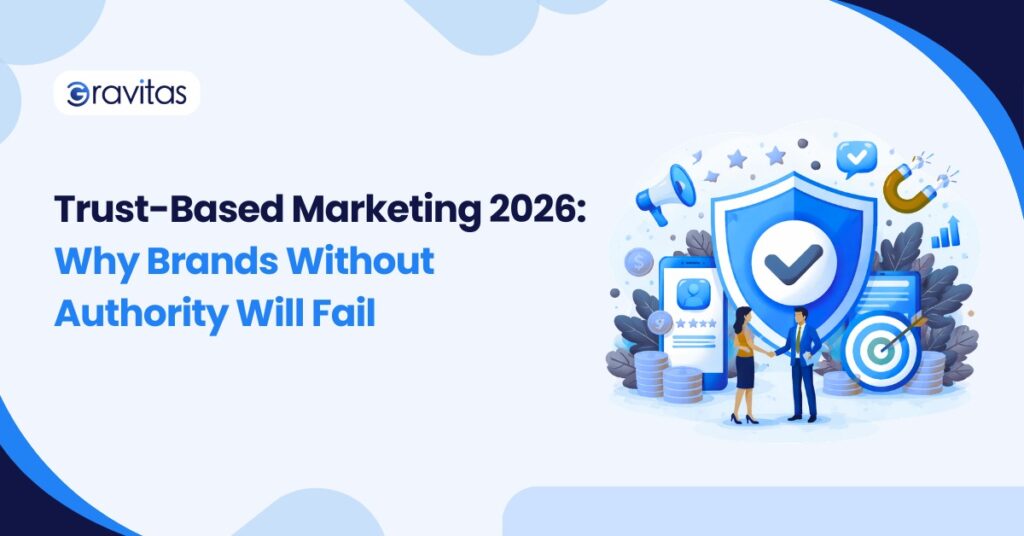
Trust-Based Marketing 2026 refers to a marketing approach focused on building authority, expertise, and credibility through valuable content, transparent communication, and consistent brand experience.
Unlike traditional marketing strategies that focused primarily on traffic or lead generation, trust-based marketing prioritizes long-term credibility and customer relationships.
For years, marketers optimized campaigns around metrics such as:
- Keyword rankings
- Backlinks
- Paid traffic
- Click-through rates
While these metrics still matter, search ecosystems have evolved.
AI search engines now evaluate signals such as:
- Author expertise
- Brand reputation
- Customer feedback
- Industry credibility
- Content originality
In other words, marketing success increasingly depends on whether a brand is perceived as a trusted authority.
Why Trust-Based Marketing 2026 Matters More Than Ever
Rise of AI Search Engines
AI-powered search tools are rapidly changing how users discover information.
Instead of manually exploring multiple websites, users often rely on AI-generated answers that summarize trusted sources. These systems analyze credibility signals before referencing content.
For marketers, this creates a new challenge: content must be trustworthy enough for AI systems to recommend it.
AI platforms evaluate several factors when determining which sources to highlight, including brand recognition, expert authorship, and content quality.
Brands that invest in thought leadership and authority-building are far more likely to appear in AI-generated answers.
Decline of Traditional SEO Tactics
For years, many companies relied on tactics such as keyword stuffing, mass backlink building, or publishing large volumes of low-value content.
Today, these strategies are far less effective.
Search engines increasingly prioritize helpful, experience-driven content designed to genuinely assist users.
Google has emphasized this shift through its framework for evaluating content quality. Businesses can review the Google E-E-A-T guidelines to understand how search engines assess credibility through experience, expertise, authority, and trust.
This change signals a broader transformation in digital marketing: ranking is no longer about optimization alone, it is about demonstrated expertise.
Key Elements of Trust-Based Marketing 2026
Building trust requires a combination of credibility signals that reinforce authority across every customer interaction.
Authority Building
Authority develops when audiences consistently see a brand as a reliable source of knowledge.
This happens when businesses invest in:
- Thought leadership articles
- Expert-driven blog content
- Research insights
- Industry analysis
- Detailed case studies
Brands that publish original insights and practical expertise naturally gain recognition as industry authorities.
Over time, this authority translates into stronger visibility, higher engagement, and greater customer confidence.
Transparency and Authenticity
Modern audiences are highly sensitive to marketing that feels exaggerated or artificial.
Transparency has become a powerful competitive advantage.
Brands that communicate honestly acknowledging challenges, sharing realistic outcomes, and maintaining an authentic voice build deeper relationships with their audiences.
Authenticity also encourages long-term brand loyalty, which is increasingly valuable in competitive digital markets.
Social Proof and Reputation
People trust other people more than brand messaging.
Research from Nielsen suggests that 92% of consumers trust peer recommendations over traditional advertising. This is why customer testimonials, reviews, and case studies play such an important role in trust-based marketing.
Strong social proof signals include:
- Verified reviews
- Customer testimonials
- Success stories
- User-generated content
- Community engagement
When audiences see others benefiting from a brand, credibility grows naturally.
Consistent Content Experience
Trust is reinforced when customers experience consistent messaging across every touchpoint.
Whether interacting with a website, reading a blog post, or engaging with social media, audiences expect a unified brand voice.
Consistency across platforms helps brands appear more reliable and professional. Businesses looking to strengthen their messaging strategy can learn about our content marketing solutions to build authority-driven content that supports long-term credibility.
Trust Signals That Influence Rankings in 2026
Search engines and AI systems evaluate several signals when determining whether content is trustworthy.
One of the most important factors is author credibility. Content written by identifiable experts with clear professional backgrounds tends to perform better in search results.
Technical trust signals also play a role. Secure websites, fast loading pages, and intuitive navigation indicate professionalism and reliability.
Another critical factor is brand recognition across the internet. Mentions in industry publications, media articles, and professional communities strengthen authority.
Customer reviews and ratings also influence both purchasing decisions and search visibility.
Finally, high-performing content typically provides depth, originality, and real insights rather than surface-level information. Marketers interested in understanding industry data trends can explore the latest marketing trends reports, which highlight how customer expectations and digital strategies are evolving.
How to Build a Trust-Based Marketing Strategy in 2026
Create Value-Driven Content
High-trust brands publish content designed to educate and solve real problems.
This includes:
- In-depth blog articles
- Industry reports
- Practical guides
- Expert commentary
When audiences consistently gain knowledge from a brand’s content, they begin to view it as a reliable authority.
Optimize for E-E-A-T
To strengthen credibility signals, brands should demonstrate:
- Real industry experience
- Expert knowledge
- Authoritative insights
- Trustworthy references
Providing author credentials, citing credible data sources, and maintaining accurate content all contribute to stronger E-E-A-T signals.
Leverage Personal Branding
Consumers increasingly trust individuals more than corporate messaging.
When founders, executives, and industry experts actively share insights, it humanizes the brand and strengthens credibility.
Thought leadership on professional platforms can significantly influence brand perception.
Use Data and Case Studies
Evidence transforms marketing claims into credible insights.
Sharing performance metrics, research findings, and customer success stories helps audiences understand the real-world impact of a brand’s expertise.
Data-backed insights make content far more persuasive and trustworthy.
Common Mistakes Brands Make Without Authority
Many organizations struggle with credibility because they prioritize short-term tactics instead of long-term authority.
One common mistake is relying exclusively on advertising. While ads can generate traffic, they rarely build lasting trust.
Another issue is ignoring brand reputation. Negative reviews or unresolved customer concerns can quickly damage credibility.
Inconsistent messaging across platforms can also weaken trust by creating confusion about brand identity.
Finally, publishing large volumes of generic AI-generated content without expert insight often reduces perceived authority.
Future Trends in Trust-Based Marketing 2026
Several trends are shaping the next phase of trust-based marketing.
AI-driven credibility scoring may soon evaluate websites based on measurable authority indicators.
Voice search technologies are expected to prioritize highly trusted sources when delivering answers.
Community-led branding is also gaining momentum as brands focus on building loyal audiences rather than broadcasting promotional messages.
Additionally, micro-influencers with highly engaged communities are becoming powerful trust builders in niche industries.
How Gravitasin Can Help You Build Trust-Based Marketing 2026
Building brand authority requires strategic planning, expert content, and consistent communication.
Gravitas helps businesses strengthen credibility through strategic digital marketing planning, authority-driven content development, and AI-ready SEO optimization. Companies looking to strengthen their online presence can explore our digital marketing services to see how these strategies support long-term growth.
Conclusion
Trust-Based Marketing 2026 represents a fundamental shift in digital marketing strategy.
As search engines and AI tools prioritize credibility, brands must focus on building genuine authority rather than simply optimizing for visibility.
Organizations that invest in expertise, transparency, and valuable content will earn both higher rankings and stronger customer relationships.
In the future of marketing, success will not belong to the brands that speak the loudest.
It will belong to the brands that earn the most trust.
FAQs
Trust-Based Marketing 2026 focuses on building brand credibility through expert content, transparency, and consistent communication to earn customer trust and improve digital visibility.
Authority helps search engines, AI platforms, and customers identify credible brands, increasing both search rankings and customer confidence.
You can build trust by publishing valuable content, showing real expertise, encouraging customer reviews, and maintaining transparent brand communication.
Yes. Trust-based marketing strengthens E-E-A-T signals, helping websites rank higher and gain better visibility in search and AI-driven results.
Trust signals include expert authorship, secure websites, positive reviews, authoritative backlinks, and high-quality original content.