Ranking on Google in 2026 is no longer about publishing hundreds of blog posts and hoping one of them gets traffic.
Search engines have become smarter. They no longer look at a single page and ask, “Does this page contain the keyword?” Instead, they evaluate whether a website genuinely understands a topic, covers it from multiple angles, and provides useful information that answers user needs.
This shift has made SEO content clusters one of the most effective strategies for building organic visibility.
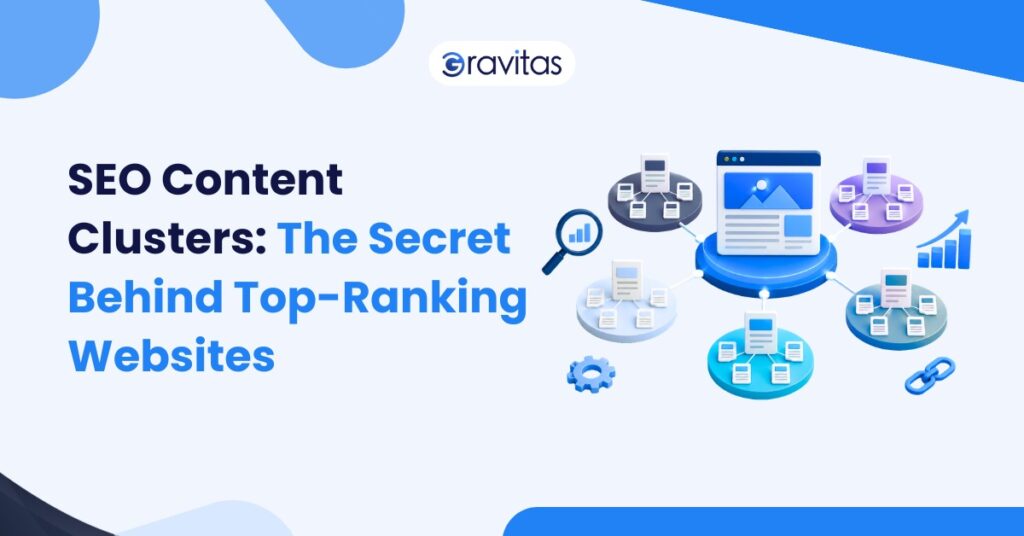
Think of a content cluster like a knowledge hub. One main page covers a broad topic, while multiple supporting pages answer specific questions related to that topic. Together, they create a connected ecosystem that helps search engines recognise your expertise.
For example, a company offering digital marketing services should not only publish a single article about “SEO.” A stronger approach is creating a complete SEO content cluster covering keyword research, technical SEO, content optimisation, link building, local SEO, and SEO analytics — all connected through strategic internal links.
Before building content clusters, businesses should also ensure their fundamentals are strong with an on-page SEO checklist for beginners, because even the best content strategy needs proper page optimisation.
Google’s Google Search ranking systems focus on understanding relevance, helpfulness, and quality making structured content strategies more important than ever.
What Are SEO Content Clusters?
Understanding the SEO Content Clusters Strategy
An SEO content cluster is a strategic way of organising website content around a central topic.
Instead of creating disconnected articles targeting separate keywords, businesses create:
1. Pillar Page
A comprehensive resource covering the main topic.
2. Cluster Content
Supporting articles that explore specific parts of that topic in detail.
3. Internal Links
Connections between the pillar page and supporting articles create a clear content relationship.
For example:
Pillar Topic: SEO Strategy
Supporting Cluster Content:
- How keyword research improves SEO
- Technical SEO best practices
- How to optimise content for Google
- SEO mistakes businesses should avoid
- Measuring SEO performance
Each article answers a specific search query, but together they strengthen the website’s authority around SEO.
This is how successful websites move from ranking for one keyword to becoming trusted resources for an entire topic.
How Content Clusters Improve Website Authority
Search engines use semantic understanding to identify relationships between topics.
When multiple pages consistently cover connected concepts, they create stronger relevance signals.
A website publishing one article about “email marketing” may not appear highly authoritative.
But a website covering:
- Email marketing strategy
- Email automation
- Newsletter best practices
- Lead nurturing campaigns
- Email conversion optimization
creates a much stronger expertise signal.
Content clusters show search engines:
- The website understands the subject deeply
- The content answers different user needs
- The information is connected logically
This is why topical authority has become a major factor in modern SEO.
Why SEO Content Clusters Matter in 2026
The way people search has changed.
Users are no longer searching only with short keywords like:
“SEO services”
They are asking detailed questions like:
“How can businesses improve SEO visibility with AI search?”
“How do content strategies impact Google rankings?”
AI search engines analyse these conversations differently. They look for websites that provide complete, trustworthy information.
SEO content clusters help businesses prepare for:
- AI-generated search results
- Conversational queries
- Semantic search
- Topic-based ranking systems
A well-structured website gives both Google and AI systems a clearer understanding of what your business knows best.
How SEO Content Clusters Help Websites Rank Higher
Improved Internal Linking Structure
Internal links are not just navigation tools. They help search engines understand the relationship between pages.
Imagine a website as a city.
Individual pages are buildings.
Internal links are roads connecting those buildings.
Without proper connections, important pages remain difficult to discover.
A strong content cluster creates a clear pathway:
Supporting article → Related article → Pillar page
Following Google internal linking guidelines helps businesses create stronger website structures.
Stronger Topical Authority Signals
Traditional SEO focused heavily on ranking individual pages.
Modern SEO focuses on becoming the best resource for a topic.
Content clusters help businesses move from:
“Creating content”
to:
“Building expertise.”
For example, a healthcare company writing one article about patient safety may rank for limited searches.
But creating a complete resource covering:
- Drug safety monitoring
- Regulatory requirements
- Pharmacovigilance processes
- Safety reporting systems
creates deeper authority.
The same principle applies across industries.
Better User Experience and Engagement
A good content cluster not only benefits search engines but also improves the user journey.
Visitors can move naturally from one topic to another.
Someone reading:
“Benefits of SEO”
can continue exploring:
“How SEO works”
“What is technical SEO?”
“How businesses measure SEO results”
Businesses should also strengthen their website foundation through technical SEO best practices to ensure search engines can properly access and understand content.
The Structure of an Effective SEO Content Clusters Strategy
Creating a Pillar Page
A pillar page is the central resource of a content cluster.
It should not be a short blog post.
It should be a complete guide covering:
- The main topic
- Important subtopics
- Common questions
- Practical insights
A strong pillar page acts as the “home” of your topic.
Example:
A pillar page titled:
“Complete Guide to Digital Marketing”
can link to supporting pages about:
- SEO
- Paid advertising
- Social media marketing
- Content marketing
- Marketing automation
Building Supporting Cluster Content
Supporting articles target specific user questions.
They help capture long-tail searches and provide deeper information.
Effective cluster content can include:
- Tutorials
- FAQs
- Comparisons
- Case studies
- Industry insights
The goal is not to create more content.
The goal is to create connected content that answers the complete customer journey.
Strategic Internal Linking Between Pages
Internal linking should be intentional.
Good internal links:
- Use descriptive anchor text
- Connect relevant topics
- Support user navigation
- Strengthen page relationships
Avoid linking randomly just to increase link numbers.
Every link should help users discover something valuable.
SEO Content Clusters and AI Search Optimisation
How AI Search Engines Understand Topic Relationships
AI search engines do not simply scan keywords.
They understand:
- Context
- Entities
- Relationships
- User intent
A content cluster provides a structured knowledge network.
This helps AI systems understand:
“This website has detailed expertise about this topic.”
Optimising Content Clusters for ChatGPT and AI Overviews
AI-driven search experiences prefer content that is easy to understand.
Businesses should focus on:
Google’s AI search features are changing how users discover information, making AI-friendly content structures increasingly important.
EEAT Signals and Content Clusters
Google’s quality evaluation focuses heavily on trust and expertise.
Content clusters support EEAT by showing:
- Experience in the industry
- Knowledge depth
- Consistent expertise
- Reliable information
A website with connected expert content appears more credible than one with random articles.
Common SEO Content Clusters Mistakes to Avoid
Creating Thin or Duplicate Content
Publishing multiple low-quality articles around similar keywords can damage SEO performance.
Every cluster page should add something new.
A successful cluster focuses on value, not volume.
Ignoring Search Intent
A keyword does not always represent the same user need.
Someone searching:
“SEO meaning”
needs education.
Someone searching:
“SEO agency pricing”
may be ready to buy.
Understanding intent helps businesses create content that supports every stage of the customer journey.
Weak Internal Linking Practices
A content cluster without internal links is just a collection of separate articles.
The connection is what creates authority.
Targeting Too Many Unrelated Topics
Authority comes from focus.
A website covering unrelated topics may struggle to build strong relevance.
Choose topics connected to your audience, expertise, and business goals.
How to Build SEO Content Clusters Successfully in 2026
Conduct Topic and Keyword Research
Start by identifying:
- Main customer problems
- Search questions
- Industry topics
- Related keywords
Create a topic map before creating content.
This prevents random publishing.
Organise Content Around User Intent
A strong cluster should support users at different stages:
Awareness → Learning
Consideration → Comparing
Decision → Taking action
This creates a complete search experience.
Create AI-Friendly and Readable Content
Content should be designed for humans first.
Use:
Following effective content writing tips for SEO helps improve both user experience and search visibility.
Monitor Cluster Performance Regularly
SEO is not a one-time activity.
Track:
- Organic traffic
- Ranking improvements
- User engagement
- Content performance
Update and expand clusters based on real data.
Future Trends in SEO Content Clusters
AI-Generated Search Will Reward Topic Authority
As AI search grows, businesses with deeper expertise will have an advantage.
Search visibility will increasingly depend on trust and content relationships.
Voice and Conversational Search Will Grow
People are searching more naturally.
Content clusters help businesses answer complex conversational queries.
Multimedia Content Clusters Will Increase Engagement
Future clusters will include:
- Videos
- Podcasts
- Infographics
- Interactive tools
Multiple formats create stronger engagement.
Entity-Based SEO Will Become More Important
Search engines are improving how they understand entities and connections.
Businesses that build strong topic relationships will benefit from better visibility.
Conclusion
SEO content clusters are no longer just a content organisation method.
They are a long-term strategy for building authority, improving rankings, and creating meaningful connections between your brand and your audience.
Businesses that invest in structured content ecosystems will have a stronger advantage in traditional search results and AI-powered search experiences.
The future of SEO is not about creating more pages.
It is about creating smarter, connected, and more valuable content.
FAQs
SEO content clusters are groups of connected pages focused on one main topic. They include a pillar page and supporting articles linked together.
They improve SEO by increasing topical authority, improving internal linking, and helping search engines understand website expertise.
A pillar page is a detailed resource covering a broad topic and linking to supporting content.
Yes. Content clusters help AI systems understand topic relationships, context, and expertise.
There is no fixed number. The size depends on the topic complexity and how many questions users need answered.