Google Search has evolved dramatically over the past few years. Ranking on the first page is no longer about stuffing keywords into content or building hundreds of backlinks. Today, Google is focused on rewarding websites that genuinely help users make informed decisions.
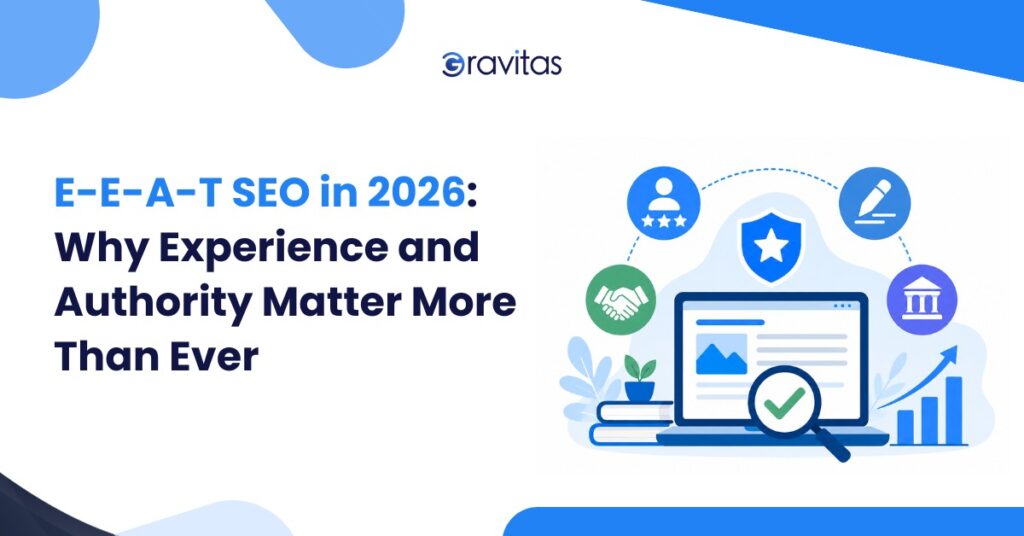
E-E-A-T SEO in 2026 has become one of the most important aspects of a successful SEO strategy. Businesses that demonstrate SEO experience and expertise, publish trustworthy content, and establish industry authority are far more likely to earn sustainable rankings than those relying on outdated SEO tactics.
The rise of AI-generated content has made Google’s algorithms even more selective. With millions of similar articles published every day, Google increasingly favors content that offers first-hand experience, expert insights, and clear evidence of credibility. Whether you’re running an eCommerce store, SaaS company, healthcare practice, financial service, or B2B business, building trust is now just as important as optimizing keywords.
If your website wants to remain competitive in 2026, understanding E-E-A-T isn’t optional, it is essential.
What Is E-E-A-T SEO and Why Does It Matter in 2026?
E-E-A-T stands for:
- Experience
- Expertise
- Authoritativeness
- Trustworthiness
These principles help Google evaluate whether your content deserves to rank for users searching for reliable information.
Unlike traditional SEO, which often prioritized technical optimization, backlinks, and keyword usage, modern SEO evaluates who is creating the content, why it exists, and whether users can trust it.
Google’s Google E-E-A-T guidelines don’t act as a direct ranking factor by themselves. Instead, they influence how Google’s Helpful Content Systems and Search Quality systems evaluate the overall quality of a website.
Google’s own Google Search Quality Rater Guidelines explain that quality content should demonstrate genuine experience, expert knowledge, and trustworthiness, especially for topics that can impact a person’s health, finances, or safety. You can learn more directly from Google’s documentation here:
Today, Google isn’t just evaluating your article, it is evaluating your website, your brand, your authors, and your reputation across the web.
Why Experience Has Become a Critical SEO Ranking Factor
One of the biggest additions to Google’s quality framework is Experience.
Google wants to know:
“Has this person actually done what they’re writing about?”
This shift helps Google surface practical, useful information instead of generic summaries copied from other websites.
Consider two articles about implementing CRM software.
One article simply lists features.
The other explains:
- challenges faced during implementation
- lessons learned
- mistakes to avoid
- actual client results
- screenshots and workflows
Which one would users trust more?
Google increasingly prefers the second.
Experience improves content quality for better rankings because it provides information users can’t easily find elsewhere.
Businesses can demonstrate experience by including:
- customer success stories
- original research
- case studies
- before-and-after results
- industry observations
- practical implementation tips
- product demonstrations
- real screenshots
- expert interviews
Original experiences create unique value that AI alone cannot replicate.
The Four Key Elements of E-E-A-T SEO
1. Experience: Showing Real Knowledge and Practical Results
Experience is about proving you’ve actually solved the problem you’re discussing.
Instead of saying,
“SEO improves rankings.”
Show:
- how traffic increased after technical improvements
- what challenges were faced
- what worked
- what failed
- lessons learned
Businesses should publish:
- implementation guides
- customer success stories
- project insights
- industry observations
- original data
A well-planned SEO content strategy services approach can help organizations consistently create experience-driven content instead of publishing generic articles.
2. Expertise: Creating Accurate and Valuable Content
Experience alone isn’t enough.
Content also needs expertise.
Google expects authors to demonstrate deep knowledge of their subject area through:
- accurate information
- industry terminology explained clearly
- expert opinions
- updated statistics
- reliable sources
- practical recommendations
This is where SEO experience and expertise work together.
For businesses, this means:
- adding author biographies
- mentioning certifications
- showcasing years of industry experience
- involving subject matter experts
- reviewing AI-generated drafts before publishing
Readers trust content when they know who created it and why they’re qualified.
3. Authority: Building Website Credibility
Authority isn’t something you claim.
It’s something you earn.
If other respected websites consistently reference your business, Google gains confidence that you’re a trusted source.
Businesses wondering how to improve website authority should focus on:
- earning editorial backlinks
- publishing original research
- guest posting on reputable websites
- speaking at industry events
- earning media mentions
- building a recognizable brand
- creating link-worthy resources
Authority grows over time through consistent expertise and valuable content but not shortcuts.
Your SEO link-building services strategy should prioritize quality relationships over acquiring large numbers of low-quality backlinks.
4. Trust: Making Websites Reliable and Secure
Google considers Trust the foundation of E-E-A-T.
Even highly authoritative websites can struggle if users don’t trust them.
Important trust signals include:
- HTTPS security
- transparent contact information
- About Us page
- privacy policy
- refund policies
- customer testimonials
- verified business information
- clear author details
- updated content
- accurate citations
Trust also comes from consistency.
If users repeatedly find accurate, useful information on your website, Google receives positive signals that reinforce your site’s credibility.
How E-E-A-T Impacts Google Rankings in 2026
Google’s Helpful Content System has become increasingly sophisticated.
Instead of rewarding websites with the most keywords, Google’s systems evaluate whether content genuinely satisfies user intent.
Among the biggest Google ranking factors 2026 include:
- helpful content quality
- search intent satisfaction
- content freshness
- topical authority
- user engagement
- brand reputation
- author credibility
- website trustworthiness
Google also evaluates broader brand signals.
Businesses mentioned by reputable publications, industry experts, podcasts, universities, or government websites naturally build stronger authority than anonymous websites with little external recognition.
The result?
Better rankings become a byproduct of becoming a trusted brand, not just an optimized website.
How Businesses Can Improve E-E-A-T SEO
Building E-E-A-T takes time, but the long-term SEO benefits are substantial.
1. Create Experience-Based Content
Move beyond rewriting existing articles.
Instead, publish:
- customer case studies
- lessons learned
- project walkthroughs
- original data
- expert interviews
- implementation challenges
- practical frameworks
Unique experiences differentiate your content from AI-generated summaries.
2. Showcase Experts
Every article should clearly communicate:
- who wrote it
- their qualifications
- industry experience
- certifications
- professional background
Detailed author pages improve credibility for both users and search engines.
3. Improve Content Accuracy
Review older articles regularly.
Update:
- statistics
- screenshots
- product information
- algorithm changes
- industry trends
- broken links
Fresh, accurate content performs significantly better over time.
4. Build Brand Authority
Authority extends beyond your website.
Invest in:
- digital PR
- podcasts
- webinars
- speaking engagements
- original research
- community participation
- industry partnerships
Strong brands naturally earn mentions, backlinks, and citations.
Businesses looking for long-term organic growth should combine these efforts with professional SEO services for businesses that align technical SEO, content, and authority building.
E-E-A-T SEO Mistakes Businesses Should Avoid
Many organizations invest heavily in content but overlook the quality signals Google values most.
Common mistakes include:
Publishing Generic AI-Generated Content
AI can accelerate content creation, but publishing unedited AI articles often results in repetitive, low-value content that lacks original insights.
Ignoring Author Credibility
Anonymous articles without author information reduce trust.
Users want to know who’s providing advice.
Never Updating Existing Content
Outdated information gradually loses credibility.
Refreshing content regularly signals reliability.
Writing Without Understanding User Intent
Ranking isn’t about answering every question.
It’s about answering the right question better than competitors.
Missing Trust Elements
Missing contact pages, outdated policies, poor website security, or fake testimonials can reduce user confidence.
Trust is built through transparency.
How AI Content and E-E-A-T Work Together in 2026
AI is now a normal part of modern content marketing.
Google doesn’t penalize content simply because AI helped create it.
What matters is whether the final content is genuinely helpful, original, and trustworthy.
Businesses should use AI to:
- generate outlines
- organize ideas
- summarize research
- improve readability
- speed up drafting
Human experts should then:
- verify facts
- add first-hand experiences
- include customer insights
- provide original examples
- review accuracy
- ensure relevance
This human review strengthens trust signals for SEO and creates content that delivers value beyond what AI can generate alone.
The winning strategy in 2026 isn’t AI versus humans, it’s AI supported by human expertise.
Tools to Measure and Improve E-E-A-T Performance
Although E-E-A-T isn’t measured through a single score, several tools can help businesses improve the signals Google evaluates.
Google Search Console
Monitor:
- search performance
- indexing issues
- Core Web Vitals
- page experience
- search queries
Use Google Search Console to identify pages losing visibility and prioritize content improvements.
Google Analytics 4
Track:
- engagement time
- returning visitors
- conversions
- bounce trends
These insights reveal whether users actually find your content valuable.
SEO Audit Tools
Platforms like Ahrefs, Semrush, and Screaming Frog help identify:
- broken links
- technical SEO issues
- backlink quality
- content gaps
Content Optimization Tools
Tools such as Clearscope, Surfer SEO, and MarketMuse can help identify missing topical coverage, but remember that optimization should enhance content but not to replace genuine expertise.
Conclusion: E-E-A-T SEO in 2026 Is the Future of Sustainable Rankings
SEO is no longer just a technical discipline focused on keywords and backlinks.
Google increasingly rewards websites that consistently demonstrate genuine experience, deep expertise, strong authority, and trustworthy information.
E-E-A-T SEO in 2026 is becoming essential because Google rewards websites that demonstrate real experience, authority, and trust.
Businesses that invest in credible authors, original insights, accurate information, transparent websites, and long-term brand authority will be better positioned to withstand future algorithm updates.
Instead of asking, “How do we rank higher?”
The better question in 2026 is:
“How do we become the most trusted source in our industry?”
Businesses that answer that question successfully won’t just improve rankings, they’ll build lasting customer trust and sustainable organic growth.
Frequently Asked Questions
E-E-A-T SEO in 2026 is Google’s framework for evaluating content based on Experience, Expertise, Authoritativeness, and Trustworthiness. While it’s not a direct ranking factor, these quality signals influence how Google’s systems assess whether content is reliable, helpful, and deserving of higher visibility in search results.
Websites that consistently publish accurate, experience-driven, and trustworthy content are more likely to perform well in Google Search. Strong author profiles, original insights, reputable backlinks, positive brand mentions, and transparent website information all contribute to better long-term search performance.
Businesses can improve website authority by publishing original research, earning high-quality backlinks, gaining mentions from reputable publications, showcasing subject matter experts, maintaining accurate and up-to-date content, and building a strong brand presence across digital channels.
Experience demonstrates that the content creator has real-world knowledge of the topic. First-hand insights, case studies, implementation examples, customer stories, and lessons learned provide unique value that generic content cannot, making it more useful for users and more aligned with Google’s quality expectations.
AI-generated content itself isn’t a problem. Google evaluates the quality of the final content rather than how it was created. However, AI-generated drafts should always be reviewed by experts, enriched with original insights, fact-checked, and updated with real-world experience to meet E-E-A-T standards and build user trust.