Introduction
A learner considering an online course rarely makes a decision after seeing just one advertisement. They may watch an instructor explain a concept, compare course offerings, read student reviews, and explore career opportunities before submitting an enquiry. Social media plays an important role throughout this process.
For EdTech businesses, Social Media Marketing for EdTech is an opportunity to influence how potential learners discover, evaluate, and choose educational programmes. However, the focus should go beyond attracting attention. It should be on reaching people whose learning goals, interests, and requirements align with the courses being offered.
Understanding Social Media Marketing for EdTech Companies
Social media marketing in the EdTech industry involves using platforms such as Instagram, LinkedIn, and Facebook to introduce educational offerings, communicate course value, and build relationships with prospective learners.
Unlike traditional course promotions that primarily highlight fees, duration, and admission dates, social media allows EdTech brands to demonstrate what learners can actually gain from a programme.
Consider a company offering a data analytics course. Instead of repeatedly publishing admission announcements, it can share a short demonstration of a data visualisation technique, explain how businesses use analytics, or introduce an instructor who teaches the subject. Each piece of content gives potential learners a better understanding of the programme.
This is where Digital Marketing for EdTech becomes more meaningful. Social media supports different stages of the decision-making process, from initial course discovery to researching learning options and eventually submitting an enquiry.
Common Lead Generation Challenges for EdTech Companies
An increase in enquiries doesn’t always mean an increase in potential enrolments. EdTech companies often discover that their campaigns attract attention but struggle to bring in learners who are genuinely interested in their programmes.
Some common challenges include:
- Low-Quality Enquiries: A campaign may attract people who submit their details to access a free resource but have little interest in purchasing a course. Others may not meet the course eligibility requirements or have the budget to enroll.
- High Competition: Learners can compare similar courses across multiple platforms. When several providers promote the same certifications or subjects, communicating the actual value of a programmes becomes difficult.
- Low Engagement: Content that focuses entirely on admissions, discounts, and course announcements gives audiences little reason to interact with a brand between enrolment periods.
- Poor Lead Conversion: Delayed responses, unclear course information, and generic follow-ups can cause interested prospects to explore competing programmes.
- Unclear Audience Targeting: Promoting an advanced professional certification to a broad student audience can result in irrelevant enquiries and unnecessary advertising expenditure.
The underlying issue is often a disconnect between the people a campaign reaches and the people a business actually wants to enroll. Better EdTech lead generation starts with understanding this difference.
How EdTech Companies Can Generate Quality Leads Through Social Media
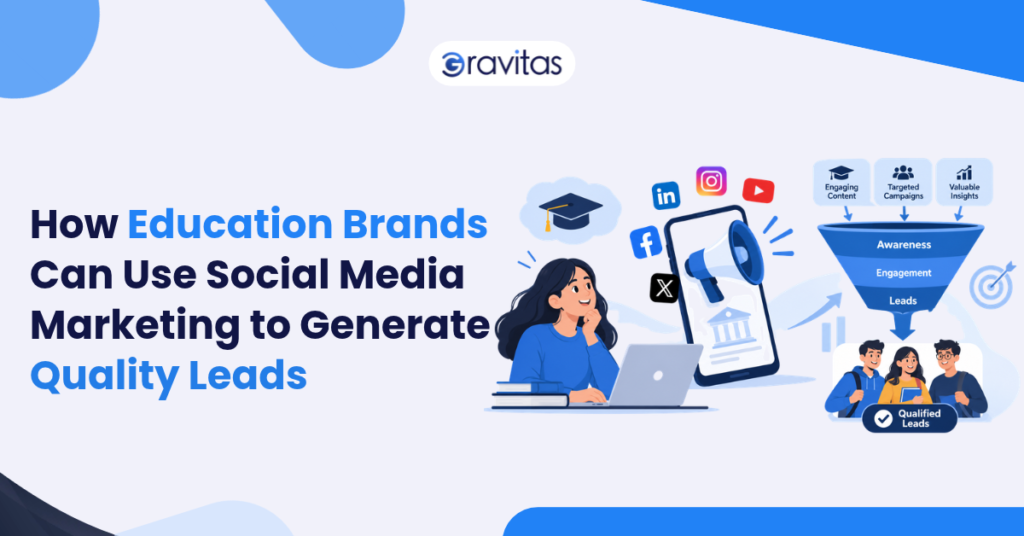
The most effective social media strategies connect what learners want to know with what an EdTech company offers. Instead of treating every post as a promotion, businesses can use different content formats and campaigns to influence specific stages of the learner’s decision-making journey.
1. Use Instagram to Attract and Engage Learners
For many prospective students, discovering a course begins with a topic that interests them rather than a search for a particular EdTech brand. Instagram gives businesses an opportunity to capture that interest through visual and educational content.
For instance, an institute offering digital marketing courses could publish a Reel explaining how brands use audience segmentation or demonstrate how an advertising campaign is structured. Such content introduces the subject while giving viewers a glimpse of what they could learn through the programme.
Carousels can take this further by explaining topics such as career paths, skills required for specific job roles, or differences between beginner and advanced certifications. Instructor introductions and genuine learner experiences can also help prospective students understand the teaching approach and learning environment.
However, discovery alone doesn’t generate an enquiry. The content should connect naturally with the course being offered. A Reel about data analytics, for example, could direct interested viewers to a relevant course page or a free introductory session.
This makes Instagram marketing for EdTech more purposeful. Rather than asking every viewer to enroll immediately, businesses can first build interest and then offer a relevant next step.
2. Use LinkedIn to Reach Professionals and Career-Focused Learners
LinkedIn offers a different opportunity because its audience includes working professionals, recent graduates, educators, and people involved in corporate learning decisions.
An EdTech company offering cloud computing or project management certifications, for example, can publish content around industry skill requirements, changing job roles, and professional development. These topics connect the course offering with a specific career or business requirement.
The platform also allows businesses to reach relevant professional audiences through targeted campaigns. LinkedIn Lead Gen Forms can make it easier for interested users to share their details without navigating away from the advertisement.
For companies offering corporate training or institutional learning solutions, the approach can be different. Content addressing employee skill gaps, workforce training requirements, and learning management challenges can attract HR leaders and institutional decision-makers.
Effective LinkedIn marketing for EdTech therefore depends on understanding whether the intended audience is an individual looking to advance their career or an organisation evaluating a training solution.
3. Create Valuable Content That Builds Trust
Choosing an educational programme involves more consideration than purchasing many everyday products. Learners want to understand the quality of teaching, course structure, practical relevance, and potential career applications before committing their time and money.
Social media content can help answer these questions.
A course preview can demonstrate the instructor’s teaching style. A webinar can explain a specialised subject in greater detail. A learner testimonial can offer an account of the actual learning experience.
EdTech companies can also create content around questions that commonly influence enrolment decisions:
- What skills will I develop after completing this course?
- Is the programme suitable for beginners?
- Does the course include practical projects?
- What certification or learning support is provided?
- How does the programme relate to current industry requirements?
Addressing these questions through tutorials, instructor discussions, downloadable resources, and course demonstrations gives prospective learners useful information before they contact the admissions team.
This approach also helps distinguish a brand from competitors that rely primarily on promotional messaging. When educational content consistently demonstrates subject knowledge, it gives audiences a reason to return to the brand.
4. Run Targeted Social Media Advertising Campaigns
Organic content can attract people who are interested in a subject, but paid advertising gives EdTech companies greater control over how they reach potential learners.
The important consideration is that different courses require different audiences and campaign messages.
A beginner-level programming course may appeal to college students and recent graduates, whereas an advanced cybersecurity certification may be more relevant to IT professionals with existing experience. Promoting both programmes through the same advertisement and audience segment can result in irrelevant enquiries.
A more focused campaign approach involves:
- Audience Segmentation: Create separate audience groups based on course requirements, education levels, interests, locations, and professional backgrounds.
- Relevant Ad Creatives: Highlight the specific learning outcomes, course features, and benefits that matter to each audience.
- Course-Specific Landing Pages: Direct users to pages that explain the programme they clicked on, including curriculum, eligibility, fees, and enquiry options.
- Campaign Testing: Compare different messages, creative formats, and audience segments to understand which combinations generate relevant enquiries.
Businesses can explore Meta Business advertising tools to create and manage advertising campaigns across Facebook and Instagram.
The objective of social media advertising should be to attract people who are likely to consider the programme, rather than simply maximising clicks or form submissions. This makes online course promotion more aligned with actual enrollment goals.
5. Follow Up and Nurture Course Enquiries
A learner submitting an enquiry doesn’t necessarily mean they are ready to enrol. They may be comparing course fees, checking schedules, discussing options with family, or waiting for additional information.
This makes the follow-up process an important part of lead generation.
For example, someone enquiring about a professional certification may need details about the syllabus and examination preparation, while a college student may want to understand course eligibility and available payment options. Sending both prospects the same generic message does little to address their concerns.
EdTech companies should organise enquiries based on the course selected, the information requested, and the prospect’s level of interest. Timely calls, personalised emails, or WhatsApp responses can help answer questions and move the conversation forward.
Tracking where each enquiry originated also provides valuable insight. If LinkedIn generates more enquiries from working professionals while Instagram attracts more student enquiries, the business can use this information to improve its platform-specific campaigns.
How Gravitas Consulting Helps EdTech Companies
Generating quality leads requires a clear connection between the audience a business wants to reach, the content it publishes, and the campaigns it runs.
At Gravitas Consulting, we help EdTech companies develop social media strategies that support these objectives. Our approach begins with understanding the business, its course offerings, and the audiences it wants to attract.
We plan platform-specific content for Instagram and LinkedIn, create educational and promotional creatives, and manage paid campaigns to reach relevant prospects. We also monitor campaign performance to understand which content and advertising activities are contributing to enquiries.
Through our Social Media Marketing Services, we help businesses bring content planning, audience engagement, and campaign management together as part of a focused marketing strategy.
What EdTech Companies Can Achieve Through Social Media Marketing
When social media activity is aligned with the right audience and business objectives, it can contribute to several areas of growth.
EdTech companies can improve visibility among prospective learners, generate more relevant course enquiries, and build credibility through instructor expertise and learner experiences. Consistent engagement also gives businesses more opportunities to understand audience interests and address common concerns.
Over time, insights from organic content and paid campaigns can help companies refine their messaging, allocate advertising budgets more effectively, and create better opportunities for course registrations.
Conclusion
For EdTech companies, social media marketing works best when it connects what learners are looking for with the educational opportunities a business provides. Instagram can introduce courses through engaging learning content, while LinkedIn can help reach professionals and institutional decision-makers. Valuable resources, relevant advertising, and personalized follow-ups bring these activities together.
A well-planned Social Media Marketing for EdTech strategy focuses on attracting the right people, answering their questions, and making it easier for them to take the next step.
Looking to generate more relevant enquiries for your EdTech business? Explore Gravitas Consulting’s Social Media Marketing Services and build a strategy that connects your courses with the right audience.