Businesses invest in digital marketing for different reasons. Some want more website traffic, others want stronger visibility on search, better engagement on social media, or a steady flow of leads.
But eventually, one question matters more than all of these metrics: What is marketing actually contributing to the business?
Traffic alone cannot answer that. Neither can follower counts or impressions.
The real value of digital marketing comes from what happens after someone discovers a business. Do they become a lead? Does that lead to an opportunity? Does the opportunity turn into a customer?
That is where Gravitas Consulting takes a different view of digital marketing: as a channel that should connect visibility, demand, conversions, and revenue.
Why Digital Marketing Should Focus on Revenue
Marketing activity and business results are related, but they are not the same thing.
A campaign can generate thousands of clicks and still bring very little business. A social post can receive strong engagement without reaching people who are actually looking for the service. Even a large number of leads can create problems when most of them are not relevant to what the business offers.
This is why digital marketing for business growth needs to start with the business outcome rather than the channel.
The process becomes more meaningful when every activity has a role to play:
Reach the right audience → create interest → generate intent → capture the opportunity → support conversion.
This also changes how marketing performance is viewed. Instead of asking only how many people saw a campaign, businesses can ask whether the campaign attracted the right prospects and moved them closer to becoming customers.
How Gravitas Consulting Connects Marketing With Lead Generation
At Gravitas Consulting, the starting point is the business objective.
The team first looks at who the business needs to reach, what those prospects are searching for, where they spend time, and what could influence them to take the next step. From there, the right combination of channels can be brought together.
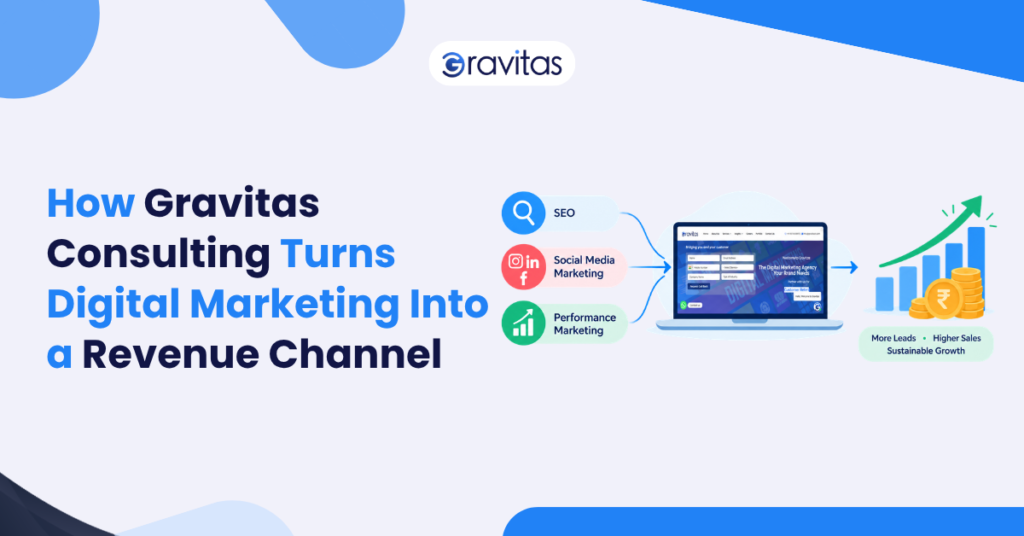
That could include SEO, paid advertising, social media, content marketing, or LinkedIn marketing, depending on the audience and business requirements.
The flow is straightforward:
Business goals → Target audience → Right marketing channels → Qualified leads → Conversions
This is where a practical digital marketing strategy makes a difference. Rather than treating every channel as a separate activity, the focus stays on how each one contributes to the larger customer journey.
For example, search can capture existing demand, content can help answer buying questions, paid campaigns can create targeted opportunities, and social or LinkedIn activity can keep the business visible to relevant decision-makers.
The objective is not to be everywhere. It is to build a connected marketing system that supports the way customers actually discover and evaluate a business.
Explore Gravitas Consulting’s digital marketing services to see how these capabilities can work together.
Turning Leads Into Business Opportunities
Generating a lead is not the same as generating revenue.
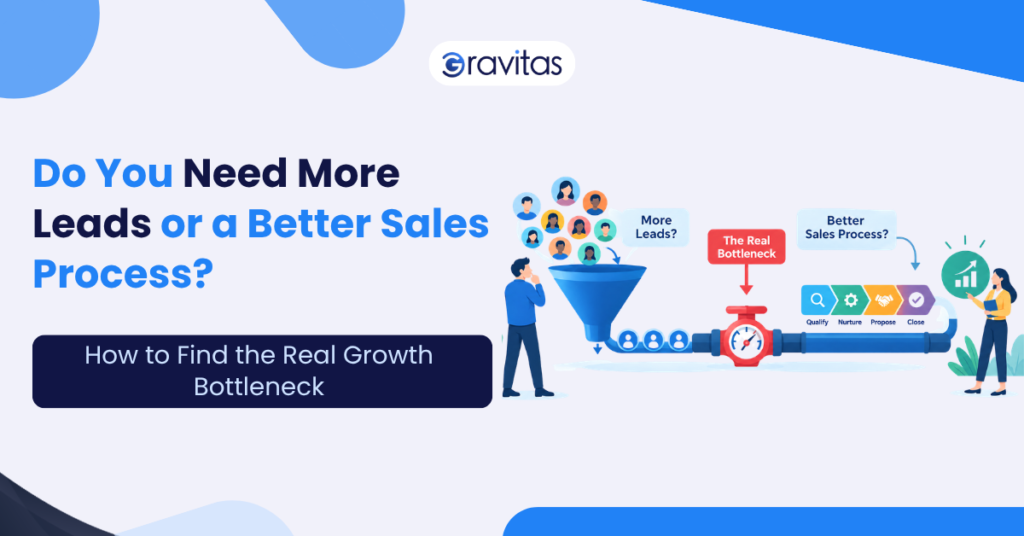
A business may receive enquiries every month and still struggle to convert them. The issue could be lead quality, slow follow-up, unclear messaging, gaps in the sales process, or a mismatch between what marketing promises and what sales communicate.
This is why lead generation through digital marketing needs to be viewed as part of a larger conversion process.
Gravitas Consulting looks at what happens after the enquiry is generated. Are the leads relevant? Are they being followed up properly? Where are potential customers dropping out? Which campaigns are producing opportunities rather than just contact forms?
These questions help businesses identify where the process needs attention instead of simply increasing lead volume.
Marketing and sales also need to work from the same understanding of a qualified opportunity. When both teams are aligned on the audience, messaging, lead quality, and follow-up process, marketing becomes much easier to connect with actual business outcomes.
Gravitas Consulting also offers Sales-as-a-Service to support businesses beyond lead generation and help create a stronger connection between marketing activity and sales opportunities.
How Gravitas Consulting Measures Marketing Performance
Not every useful marketing metric needs to appear on a monthly report.
Impressions, clicks, reach, and engagement can provide context, but businesses also need measurements that show what happened further down the funnel.
Some of the key metrics include:
- Qualified leads: Are marketing efforts attracting the right prospects?
- Conversion rate: How effectively are visitors or leads moving to the next stage?
- Cost per lead: What does it cost to generate an inquiry?
- Customer acquisition: Which activities are contributing to new customers?
- Revenue contribution: What business value can be connected to marketing activity?
This is where digital marketing ROI becomes important. It gives businesses a way to compare marketing investment with the outcomes generated from that investment.
Measurement also needs reliable tracking. Tools such as Google Analytics can help businesses understand website behaviour and campaign performance when tracking is set up appropriately.
The goal is not to make every marketing activity look successful. It is to understand what is working, what needs improvement, and where the budget is creating meaningful opportunities.
Why This Approach Matters for B2B Businesses
B2B buying decisions rarely happen after a single interaction.
A potential customer might discover a company through search, read its content, visit the website, see its LinkedIn presence, respond to a campaign, and only then decide to speak with the business.
That makes B2B digital marketing less about individual campaigns and more about creating consistency across multiple touchpoints.
Search, content, LinkedIn, paid campaigns, and the website can each play different roles in the same customer journey. When these activities are connected, a prospect can move from discovering a business to understanding its expertise and eventually making an enquiry.
The result is a marketing process that supports the longer consideration cycle common in B2B buying.
Conclusion
Digital marketing becomes more valuable when businesses can connect it to what happens beyond the screen.
The objective is not simply more traffic, more followers, or more leads. It is a connected process where marketing attracts relevant prospects, lead generation creates opportunities, sales supports conversion, and measurement shows what is contributing to business results.
That is the approach Gravitas Consulting brings to digital marketing: connecting strategy, execution, lead generation, conversion, and performance tracking around a clear business objective.
When these pieces work together, marketing can become more than a visibility exercise. It can become a measurable revenue channel.
FAQs
Digital marketing can generate revenue by attracting relevant prospects, creating demand, generating enquiries, and supporting conversions. The impact becomes clearer when businesses track the journey from marketing interaction to qualified lead, sales opportunity, customer acquisition, and revenue contribution.
A revenue-focused strategy starts with a business objective and connects audience targeting, marketing channels, lead generation, conversion, and measurement. Instead of focusing only on visibility metrics, it tracks whether marketing activity is creating relevant opportunities and contributing to customer acquisition.
Gravitas Consulting looks at metrics such as qualified leads, conversion rates, cost per lead, customer acquisition, and revenue contribution. These measurements help businesses understand which marketing activities are generating meaningful opportunities and how marketing investment relates to business outcomes.
Digital marketing can help B2B businesses reach decision-makers across multiple stages of the buying journey. Search, content, LinkedIn, paid campaigns, and websites can work together to build visibility, answer buying questions, generate enquiries, and support prospects before they speak with sales.
Yes. Marketing can attract and qualify relevant prospects while sales manages follow-up and conversion. Shared definitions of a qualified lead, consistent messaging, timely follow-up, and feedback between both teams can help identify gaps and improve the movement from enquiry to opportunity.