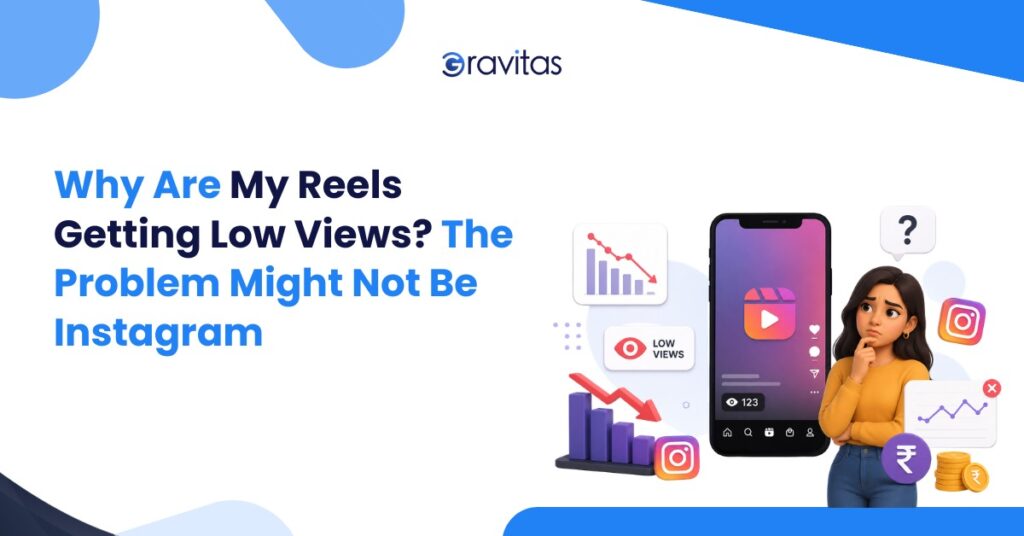
When a Reel performs badly, it is easy to assume Instagram is suppressing it. But Instagram Reels reach depends on several factors, including viewer behaviour, content relevance and how people respond to the Reel.
Think of it this way:
Instagram allows your content to reach people. Viewer behaviour determines whether that opportunity expands.
If people quickly scroll away, rarely finish the video, don’t share it or don’t interact with it, there is little evidence that the Reel deserves broader distribution.
Common Myths About the Instagram Algorithm
One of the biggest myths is that there is one Instagram algorithm controlling everything.
Instagram itself has explained that different areas of the platform use different ranking systems designed around how people use each surface.
Another common belief is that using the “right” hashtag automatically makes a Reel go viral.
Hashtags can help provide context, but they cannot compensate for content that people don’t want to watch.
There is also the belief that every low-performing Reel means your account has been “shadowbanned.” Before jumping to that conclusion, examine your content performance, recommendation eligibility and audience behavior.
What Instagram Actually Measures
Instagram engagement is more useful than simply looking at the view count.
For Reels, pay attention to signals such as:
- Watch time
- How much of the Reel people watch
- Whether viewers replay it
- Shares
- Saves
- Comments
- Profile visits
- Follows generated from the Reel
A Reel with 5,000 views and strong saves, shares and profile visits may be more valuable to a business than one with 50,000 passive views.
Why User Behavior Matters More Than You Think
Your audience is effectively giving Instagram feedback every time they interact with your content.
If viewers consistently watch your videos, share them with others or visit your profile afterward, those behaviors indicate that your content is relevant to them.
That is why audience engagement should be considered alongside reach.
You can also review Instagram’s official ranking signals to understand how Instagram describes its ranking systems and the signals used across different surfaces.
10 Reasons Your Instagram Reels Get Low Views
If you’re experiencing Instagram Reels low views, don’t immediately change your posting schedule or start deleting old content. First, identify where the problem actually exists.
Weak Hooks in the First Three Seconds
The first few seconds determine whether someone keeps watching or scrolls.
“Today I’m going to talk about…”
is rarely a strong opening.
Instead, start with the problem your audience already cares about.
For example:
Weak:
“Here are three marketing tips for businesses.”
Stronger:
“Your Meta Ads aren’t necessarily the problem. Your follow-up might be.”
The second version creates curiosity and gives the viewer a reason to stay.
Your Reel hooks should make the value of watching immediately clear.
You’re Targeting Everyone Instead of One Audience
A Reel created for “businesses” is often too broad.
A B2B software company, local restaurant and fitness brand have completely different audiences, problems and buying motivations.
Instead of creating content for everyone, define a specific target audience.
Ask:
- Who is this Reel for?
- What problem are they facing?
- What would make them stop scrolling?
- What action should they take afterward?
The more clearly your content matches audience intent, the easier it becomes to create relevant content.
Poor Watch Time
A Reel can have an excellent hook and still fail if the middle loses attention.
If viewers leave after the first few seconds, Instagram receives a weaker indication that the content is worth continuing to recommend.
Look at watch time and audience retention rather than views alone.
If viewers consistently drop at the same point, ask what happens there. Is the explanation too long? Is there an unnecessary introduction? Does the video repeat information?
Remove anything that doesn’t move the story forward.
Low Engagement Signals
Likes are only one part of Instagram engagement.
For business content, saves and shares can be particularly useful because they indicate that someone found the content valuable enough to keep or send to someone else.
For example:
- A checklist may generate saves.
- A relatable business problem may generate shares.
- A controversial industry opinion may generate comments.
- A useful tutorial may generate profile visits.
Create content around the action you want your audience to take.
Inconsistent Posting
Posting 10 Reels in one week and then disappearing for three weeks isn’t a sustainable content strategy.
Consistency doesn’t mean publishing every day.
It means creating a realistic posting frequency that your team can maintain while keeping quality consistent.
A business that can reliably publish three useful Reels every week is better positioned than one that posts daily for two weeks and then stops.
Irrelevant Hashtags
Adding dozens of unrelated hashtags doesn’t make a Reel more relevant.
Instead, use specific Instagram hashtags that accurately describe your topic, industry or audience.
For example, a B2B SaaS company would benefit more from relevant industry terms than from generic tags that attract an unrelated audience.
More hashtags do not automatically mean more reach.
Weak Captions
Your video isn’t the only searchable part of your content.
Use Instagram captions to provide context, reinforce the topic and naturally include terms your audience may search for.
This is where Instagram SEO becomes useful.
Instead of writing:
“Thoughts?”
try:
“Still relying on manual reporting every week? Here are three ways B2B teams can reduce reporting work.”
The second caption gives Instagram and the audience much more context.
Poor Video Quality
You don’t need expensive production equipment to create a good Reel.
But poor lighting, unclear audio, shaky footage or low-resolution video can make the content harder to consume.
Prioritize:
- Clear audio
- Good lighting
- Vertical framing
- Readable on-screen text
- High-resolution video
- Clean backgrounds where appropriate
Good Reel quality should make your message easier to consume, not distract from it.
No Call-to-Action
A Reel doesn’t always need a sales CTA.
But it should give viewers a logical next action.
Try CTAs such as:
- “Save this for your next campaign.”
- “Share this with your marketing team.”
- “Follow for more B2B marketing insights.”
- “Comment on the biggest challenge you’re facing.”
The right engagement CTA should match the purpose of the Reel.
Ignoring Instagram Analytics
Posting without reviewing performance is essentially guessing.
Use Instagram Insights to identify patterns across your content.
Look at:
- Reach
- Watch time
- Shares
- Saves
- Profile visits
- Follows
- Audience retention
Don’t judge your strategy based on one Reel. Compare several posts and look for repeated patterns.
For businesses, this data should feed into the wider digital marketing strategy rather than being treated as a separate social media exercise.
How the Instagram Algorithm Works in 2026
There isn’t one universal formula that guarantees Reel reach.
Instagram has explained that it uses different ranking systems for different areas of the platform. For Reels, the broader goal is to surface content that is relevant and engaging to individual users.
For marketers, that means focusing less on “beating the algorithm” and more on producing content that generates useful viewer signals.
Important Instagram ranking factors to monitor include:
- Watch time
- Completion rate
- Replays
- Shares
- Saves
- Comments
- Profile visits
- Follows
These metrics should not be viewed in isolation.
For example, a short educational Reel might have a high completion rate, while a longer tutorial may generate fewer complete views but significantly more saves and profile visits.
The goal isn’t to maximize one metric. It is to understand whether your content is creating meaningful behavior.
Metrics That Matter More Than Views
Views are easy to notice, but they don’t always tell you whether your Reel is working.
| Metric | Why It Matters |
| Watch Time | Shows whether viewers are staying with your content |
| Saves | Indicates that the content has future value |
| Shares | Shows that viewers consider it worth passing on |
| Completion Rate | Indicates whether viewers stay until the end |
| Profile Visits | Measures whether the Reel creates interest in your brand |
| Follows | Shows whether the content converts viewers into an audience |
For businesses, this distinction is important.
A Reel isn’t successful simply because it reaches thousands of people. It should contribute to a larger objective such as awareness, engagement, website traffic, enquiries or lead generation.
Reel Optimization Checklist Before Publishing
Before publishing your next Reel, run through this quick Reel optimization checklist:
- Is the hook clear within the opening seconds?
- Does the Reel address one specific problem?
- Is the keyword naturally included in the caption?
- Does the on-screen text reinforce the topic?
- Is the audio clear and appropriate?
- Is the video high quality?
- Are the hashtags relevant?
- Does the cover clearly communicate the topic?
- Is there a useful CTA?
- Are you posting when your audience is active?
Don’t treat this as a rigid formula.
The purpose is to catch avoidable mistakes before publishing.
For broader guidance, review Instagram’s best practices and adapt them to your specific audience rather than copying another creator’s strategy.
Common Mistakes Businesses Make
Businesses often approach Reels differently from creators, and that can create another problem: every Reel becomes an advertisement.
Here are some common Instagram marketing mistakes.
Selling Too Early
If every Reel begins with a product pitch, people have little reason to keep watching.
Lead with information, insight, entertainment or a problem your audience recognizes. Introduce your product or service when it genuinely fits the conversation.
Following Every Trend
Not every trending audio or format makes sense for your brand.
A trend is useful only when you can connect it naturally to your audience and message.
No Storytelling
Educational content doesn’t have to feel like a lecture.
Instead of listing five tips, build a simple story:
Problem → Mistake → Insight → Solution
That structure gives viewers a reason to continue watching.
No Audience Research
If you don’t know what your customers are asking, your content will likely reflect what your team finds interesting rather than what your audience actually needs.
Audience research should inform your content topics, hooks and messaging.
Copying Competitors
Competitor research is useful.
Copying their content is not.
Look for gaps instead:
- What questions are they not answering?
- What topics are getting engagement?
- What opinions are missing?
- Can you explain the subject more clearly?
- Can you bring actual business experience into the conversation?
Your Reel strategy should support your wider content marketing strategy rather than operate as a collection of disconnected posts.
What High-Performing Reels Have in Common
There is no guaranteed formula for viral Instagram Reels.
However, high-performing content often has several characteristics in common.
Strong Opening
The viewer immediately understands why they should continue watching.
Storytelling
The content has a logical flow instead of a collection of disconnected points.
Educational Value
The audience learns something useful, practical or new.
Emotional Connection
The Reel makes people feel something like curiosity, surprise, recognition, excitement or even disagreement.
High Replay Value
Some Reels are designed in a way that encourages viewers to watch again, particularly when information moves quickly or the ending connects back to the opening.
Consistent Branding
The content feels recognizably yours without every Reel becoming a promotional message.
The strongest strategy is not to chase virality. It is to consistently create content that attracts the right audience.
How to Increase Instagram Reels Views Organically
If you want to increase Instagram Reels views, start by improving the content rather than simply increasing the posting frequency.
Research Your Audience
Look at customer questions, comments, search queries, sales conversations and competitor discussions.
Good audience research gives you better Reel topics before you even start writing the script.
Improve Watch Time
Remove long introductions and unnecessary explanations.
Get to the point quickly, use visual changes where appropriate and keep the story moving.
Then compare retention across multiple Reels.
Use SEO-Friendly Captions
Write captions around the actual topic of the Reel.
Use natural Instagram SEO terms rather than stuffing keywords into every sentence.
For example, if the Reel is about B2B lead generation, naturally mention “B2B lead generation,” “lead quality” or the specific problem being discussed.
Add Searchable Keywords
Think about what your audience would type into Instagram’s search bar.
These Instagram keywords can appear naturally in:
- Captions
- On-screen text
- Spoken content
- Your profile
- Relevant hashtags
The objective is to make your content easier to understand and discover.
Test Different Reel Formats
Don’t assume one format will work forever.
Test:
- Talking-head videos
- Tutorials
- Customer problems
- Quick tips
- Industry opinions
- Behind-the-scenes content
- Case-study Reels
- Myth vs. fact
- Before-and-after explanations
Your Reel content strategy should be based on what your audience responds to—not what another brand is doing.
Review Analytics Every Week
Set aside time every week to review Instagram Insights.
Instead of asking:
“Which Reel got the most views?”
ask:
“Which type of Reel generated the strongest combination of retention, shares, saves, profile visits and follows?”
That question gives you much better information for your next content cycle.
If you want to connect social media discovery with broader search visibility, exploring professional SEO services can also help create a more connected organic growth strategy.
Conclusion
If you’re wondering why your Reels are getting low views, the answer isn’t always Instagram.
The bigger issue may be the content itself: a weak opening, unclear audience, low retention, limited engagement or inconsistent strategy.
Instead of chasing every algorithm update, focus on what you can control:
Create for a specific audience.
Give people a reason to keep watching.
Make the content useful enough to save or share.
Use Instagram SEO naturally.
Study your analytics.
Then improve the next Reel.
Instagram growth is rarely the result of one viral post. It comes from repeatedly understanding what your audience responds to and turning those insights into better content.
Need help creating a content strategy that increases reach and engagement? Contact our team to build a data-driven social media strategy tailored to your business.
Frequently Asked Questions
Low views can result from weak hooks, poor retention, irrelevant content, low engagement, inconsistent posting or reaching the wrong audience. Before blaming the algorithm, review your watch time, shares, saves and audience retention.
Deleting individual underperforming Reels isn’t a reliable way to improve future reach. Instead, identify why the content performed poorly and use that insight when creating your next Reel.
There is no magic hashtag number that guarantees reach. Focus on relevant, specific hashtags that accurately describe your content rather than filling the caption with unrelated terms.
There is no universal “good” watch time because it depends on the Reel’s length and purpose. A better approach is to compare watch time and retention across your own Reels and identify which formats consistently hold attention.
There is no single posting frequency that works for every account. Choose a schedule your team can maintain consistently while protecting content quality.
Yes. Follower count does not automatically determine whether a Reel can reach beyond your existing audience. Content relevance, viewer response and recommendation eligibility all matter.
A Reel may slow down when the initial audience response doesn’t provide enough signals for broader distribution. It can also continue receiving views later through search, profile visits, shares or recommendations, so don’t judge every Reel solely by its first 24 hours.