SEO remains one of the most effective ways to generate consistent website traffic, attract qualified leads, and build long-term online visibility. Unlike paid advertising, organic traffic continues to deliver value long after content is published, making SEO a critical investment for businesses looking to grow sustainably.
Yet many businesses struggle to see meaningful results from their SEO efforts. They publish content regularly, optimize website pages, and invest time into digital marketing, only to find that rankings remain stagnant and traffic growth is slower than expected.
In many cases, the issue is not a lack of effort. It is a series of overlooked SEO issues that gradually impact visibility and search performance. These SEO mistakes businesses make can limit rankings, reduce organic reach, and make it harder for potential customers to discover the business online.
The good news is that most of these issues are preventable. By understanding the common SEO mistakes that affect website performance, businesses can improve their search visibility and create a stronger foundation for long-term growth.
Why SEO Mistakes Can Reduce Your Organic Traffic
Search engines evaluate hundreds of factors when determining which pages deserve to rank. Content quality, technical performance, user experience, relevance, authority, and website structure all contribute to search visibility.
Because SEO involves multiple moving parts, even relatively small issues can have a noticeable impact on performance. A website may have excellent content but struggle because of technical limitations. Another may have strong technical foundations but fail to attract traffic because it targets the wrong keywords.
These SEO mistakes affecting rankings often go unnoticed until traffic begins to decline or growth slows significantly. This is why regular reviews and SEO Audit Services are important. They help identify issues before they become major obstacles to organic growth.
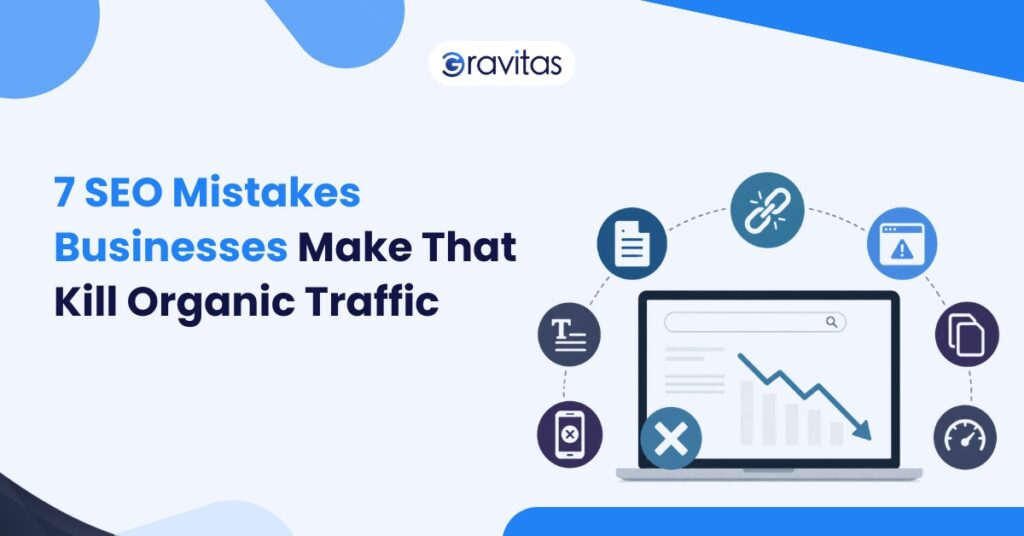
7 SEO Mistakes Businesses Make That Kill Organic Traffic
1. Ignoring Proper Keyword Research
Keyword research is the foundation of every successful SEO strategy. However, many businesses either skip this step entirely or approach it with the wrong objectives.
A common mistake is focusing exclusively on high-volume keywords without considering search intent, competition, or relevance. While broad keywords may attract large search volumes, they are often highly competitive and may not bring visitors who are ready to engage with a business.
Effective keyword research helps businesses understand:
- What their audience is searching for
- The questions customers are asking
- Which topics have ranking potential
- How search intent changes throughout the buyer journey
One of the most important SEO best practices for businesses is building content around keywords that align with customer needs and business goals. This is why many organizations rely on Keyword Research Services to identify opportunities that can drive qualified traffic rather than just website visits.
2. Publishing Low-Quality or Thin Content
Content remains one of the strongest ranking factors in SEO, but not all content delivers the same results.
Many websites publish short articles, generic blog posts, or pages that offer little value beyond information already available elsewhere. While these pages may be indexed by search engines, they often struggle to compete against more comprehensive and useful content.
Today’s search environment rewards content that:
- Answers user questions thoroughly
- Provides practical insights
- Demonstrates expertise
- Offers original perspectives
- Solves specific problems
Google’s Helpful Content Guidelines reinforce the importance of creating content that is genuinely useful to readers rather than content created solely to target search rankings.
Businesses should focus on producing content that helps customers make decisions, understand complex topics, and find solutions. High-quality content not only improves rankings but also strengthens credibility and trust.
3. Neglecting Technical SEO Issues
Technical SEO forms the foundation that allows search engines to crawl, understand, and index website content effectively.
Unfortunately, many businesses focus heavily on content creation while overlooking technical issues that can significantly affect performance.
Common website SEO problems include:
- Slow page loading speeds
- Broken links
- Crawl errors
- Duplicate content
- Mobile usability issues
- Indexing problems
These issues may not always be visible to website visitors, but they can make it more difficult for search engines to evaluate and rank a site.
Regular technical reviews and Technical SEO Services help ensure that technical obstacles do not prevent valuable content from achieving its ranking potential.
4. Not Optimizing Title Tags and Meta Descriptions
Title tags and meta descriptions play an important role in attracting clicks from search results.
Even if a page achieves a strong ranking position, poor metadata can reduce click-through rates and limit traffic potential.
Common issues include:
- Missing target keywords
- Generic page titles
- Duplicate metadata
- Unclear descriptions
- Titles that do not match search intent
Well-optimized title tags help search engines understand page relevance, while compelling meta descriptions encourage users to visit the website.
Businesses should view metadata as an opportunity to improve visibility and increase engagement from search results.
5. Ignoring Internal Linking Strategy
Internal links are often overlooked, yet they provide significant SEO benefits.
A strong internal linking structure helps search engines understand the relationship between different pages on a website. It also improves user navigation and distributes authority across important content.
Benefits of effective internal linking include:
- Improved website structure
- Better content discoverability
- Increased page authority distribution
- Enhanced user experience
- Stronger topical relevance
An effective SEO Content Strategy incorporates internal linking throughout blog content, service pages, and resource sections to create a more connected website experience.
6. Not Building Quality Backlinks
Backlinks continue to be a major ranking factor because they help establish authority and trust.
When reputable websites link to a page, search engines view those links as signals that the content provides value.
However, many businesses make the mistake of prioritizing quantity over quality.
Low-quality backlinks from irrelevant or untrustworthy sources can provide little benefit and may even create risks for long-term SEO performance.
A stronger approach focuses on:
- Industry-relevant websites
- Authoritative publications
- Thought leadership opportunities
- High-quality content promotion
- Strategic partnerships
Building authority takes time, but quality backlinks remain an important component of sustainable SEO growth.
7. Failing to Track SEO Performance
SEO without measurement is largely guesswork.
Many businesses invest in content creation and optimization but fail to monitor whether those efforts are producing meaningful results.
Without proper tracking, it becomes difficult to identify:
- Which pages generate traffic
- Which keywords are improving
- Where ranking opportunities exist
- Which content drives conversions
- What areas need improvement
Tools such as Google Search Console and analytics platforms provide valuable insights that help businesses make informed decisions.
Regular performance reviews allow businesses to refine their strategies, address issues early, and focus resources on activities that contribute to growth.
How to Fix SEO Mistakes and Increase Organic Traffic
Identifying SEO issues is only the first step. Long-term success requires a structured approach to improvement.
Conduct Regular SEO Audits
SEO audits help uncover technical issues, content gaps, and optimization opportunities that may be limiting performance.
Create User-Focused Content
Content should address customer questions, provide useful information, and offer value beyond what competitors are publishing.
Improve Website Experience
Faster page speeds, mobile-friendly design, intuitive navigation, and clear site architecture contribute to both user satisfaction and search performance.
Build a Long-Term SEO Strategy
Businesses looking for how to increase organic traffic should focus on:
- Strategic keyword planning
- Content optimization
- Technical improvements
- Internal linking
- Authority building
- Ongoing performance analysis
SEO delivers the strongest results when these elements work together as part of a consistent strategy.
SEO Best Practices Businesses Should Follow in 2026
As search continues to evolve, businesses should focus on practices that support both users and search engines.
Key priorities include:
- AI-assisted but human-reviewed content
- Search intent optimization
- Technical SEO improvements
- User experience enhancements
- Topic authority development
- Continuous monitoring and optimization
Businesses that consistently invest in these areas are more likely to achieve sustainable search visibility and long-term traffic growth.
Conclusion: Avoid SEO Mistakes Businesses Make to Grow Organic Traffic
SEO success is rarely the result of a single tactic. Instead, it comes from consistently applying best practices while eliminating the issues that reduce visibility and performance.
Avoiding SEO mistakes businesses make is essential for improving rankings, increasing visibility, and building consistent organic traffic growth.
Whether the challenge involves keyword targeting, content quality, technical SEO, internal linking, backlinks, or performance tracking, addressing these areas can significantly improve search performance over time.
Businesses that treat SEO as an ongoing process rather than a one-time activity are often the ones that achieve the strongest and most sustainable results.
Frequently Asked Questions
Some of the most common SEO mistakes include poor keyword research, publishing thin content, neglecting technical SEO, ignoring internal linking, failing to build quality backlinks, and not tracking performance regularly.
SEO mistakes can reduce rankings, limit search visibility, decrease click-through rates, and prevent search engines from properly understanding and indexing website content.
Businesses can improve SEO by conducting audits, addressing technical issues, optimizing content, improving internal linking, strengthening authority signals, and monitoring performance consistently.
Low organic traffic can result from weak keyword targeting, technical SEO issues, poor content quality, limited authority, or strong competition within the industry.
The recovery timeline depends on the issue and the competitiveness of the industry. Some improvements may appear within weeks, while others may require several months to influence rankings and traffic.