For businesses that rely on Google Search to attract customers, a change in organic rankings can influence website enquiries, lead generation, and revenue opportunities. For SMEs investing in SEO, understanding why search performance changes is essential to making informed marketing decisions.
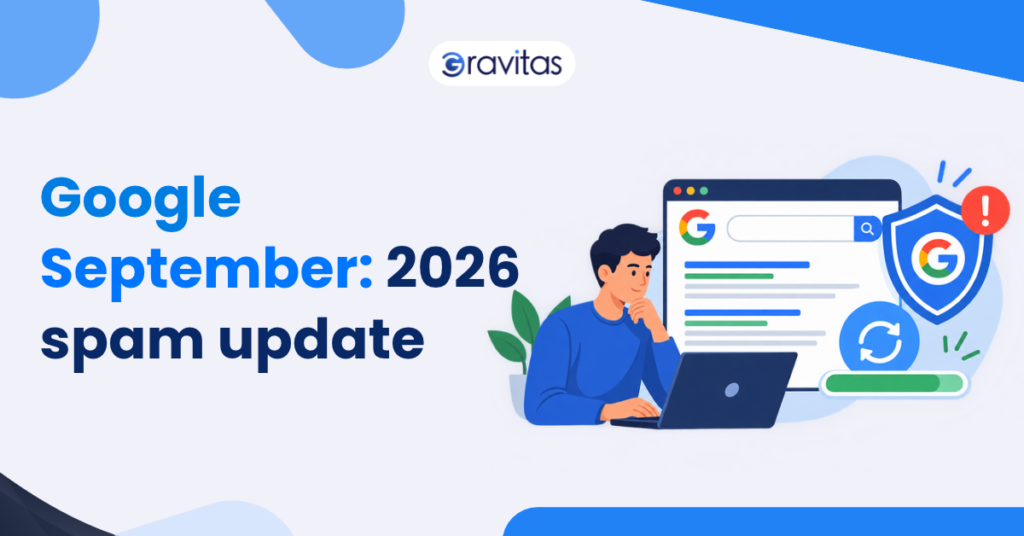
Google’s September 2026 spam update, which began on September 24 and finished rolling out on October 8, brings this into focus. The update was applied globally across all languages, but Google has not identified a specific spam technique as its primary target.
For business owners, the priority is to look beyond ranking movements and examine what their own data reveals. Understanding the update, reviewing Google’s spam policies, and identifying the pages driving performance changes can help businesses decide where their SEO strategy needs attention.
Google September 2026 Spam Update: What Happened?
Google’s September 2026 spam update was a broad update to its search spam detection systems. It was designed to improve Google’s ability to identify websites that violate its spam policies. As with other spam updates, its effects can vary across websites depending on their content, links, and compliance with Google’s guidelines.
Key Dates and Timeline
Google announced the update on September 24, 2026, and the rollout finished on October 8, 2026. The update applied globally across all languages, making it relevant to businesses targeting audiences in different countries and markets.
Website owners can review the rollout timeline through the Google Search Status Dashboard. This provides an official reference for understanding when the update began and when Google marked it as complete.
What Google Confirmed
Google identified this as a spam update without naming a specific spam technique as its primary target. Businesses should therefore avoid assuming that one particular SEO practice caused a change in their rankings.
The end of the rollout also does not establish the reason behind an individual website’s performance changes. Search visibility depends on multiple factors, including relevance, competition, content quality, and technical accessibility. Website-level data is essential for understanding what happened.
What Does the Spam Update Mean for Website Owners?
A Google spam update can affect organic visibility when its systems reassess how well websites comply with search spam policies. For businesses, this can influence the pages appearing in search results and the organic traffic those pages attract.
The commercial impact depends on which pages change. A movement affecting high-intent service pages may influence enquiries and lead generation differently from a change affecting informational blog posts.
Spam Detection and SpamBrain
Google uses automated systems, including SpamBrain, to detect spam and protect the quality of its search results. These systems help identify patterns associated with policy violations and support Google’s wider spam prevention efforts.
The September update was announced as a spam update. Google has not confirmed that it introduced a new spam detection system or identified a specific technical change to SpamBrain. Website owners should focus on established spam policies rather than assume that a particular tool or tactic was newly targeted.
Businesses can review Google’s spam update documentation to understand how these updates work and what recovery may involve
Why Rankings May Change
Websites that violate spam policies may experience lower search visibility when Google’s systems reassess their content or links. Other websites may see changes as search results are updated.
However, a ranking movement during the rollout period does not automatically establish that the spam update caused it. Changes in search demand, competitors’ content, website performance, and other Google updates can also influence organic results.
The most useful approach is to identify which pages and search queries changed, then investigate the evidence before making SEO decisions.
Google Spam Policies Website Owners Should Review
Google’s spam policies explain practices that can affect a website’s eligibility to appear in search results. The September 2026 update did not identify specific policy violations as its primary target, but reviewing these established guidelines is a practical step for businesses evaluating their SEO performance.
Scaled Content Abuse
Scaled content abuse involves generating large amounts of content primarily to manipulate search rankings rather than provide value to users. This can involve automated content, mass-produced pages, or content assembled from existing sources without meaningful added value.
Businesses publishing content at scale should check whether each page answers a genuine audience need, provides useful information, and contributes something distinct. Content production should support the customer’s decision-making process, whether they are researching a service, comparing solutions, or preparing to contact a provider.
Link Spam
Link spam refers to links created primarily to manipulate search rankings. Examples can include paid links intended to pass ranking credit, excessive link exchanges, and links generated through automated schemes.
A business should review its link-building approach and prioritise relevant industry references, useful resources, genuine partnerships, and editorial mentions. The objective is to build a credible backlink profile that reflects the website’s value and relevance.
Cloaking and Sneaky Redirects
Cloaking involves presenting different content to search engines and users to manipulate rankings. Sneaky redirects send visitors to a different destination from the one they expected, without a legitimate reason.
Website owners should check whether search engines and visitors receive consistent, relevant content. Redirects should serve clear purposes, such as directing visitors from an old URL to its appropriate replacement.
Expired Domain Abuse and Other Practices
Expired domain abuse involves repurposing an expired domain primarily to manipulate rankings through content that offers little value to users. Other practices covered by Google’s policies include doorway pages and hidden text or links used to influence search results.
These are existing policy areas, rather than confirmed targets of the September update. Businesses can consult Google Search spam policies to review the full guidance and assess their own practices.
How to Check Whether Your Website Was Affected
A structured review of search and website analytics can help businesses distinguish meaningful performance changes from normal fluctuations.
1. Review Google Search Console
Open Google Search Console and examine clicks, impressions, average position, and the pages receiving organic visibility. Compare the September 24 to October 8 rollout period with an appropriate period before the update, and review performance after the rollout.
Look for specific patterns: Did important service pages lose clicks? Did impressions change across a group of related pages? Did particular queries experience a sustained shift in average position?
Allow for reporting delays and remember that average position can vary with the mix of queries and search results.
2. Check Organic Traffic in Google Analytics 4
In Google Analytics 4, review organic search sessions and landing-page performance. Identify whether changes in search visibility correspond with changes in visits to commercially important pages.
For example, a decline in sessions to a high-intent service page may deserve closer attention than a small change to a blog that contributes little to enquiries.
3. Investigate Other Possible Causes
Check website releases, indexing issues, redirects, page speed, seasonal demand, competitor activity, and other search updates during the same period. Compare year-on-year performance where seasonality is relevant.
This evidence-led approach supports more accurate decisions about SEO performance monitoring and helps businesses prioritize the pages that matter most to their commercial goals.
What Should You Do After the September 2026 Spam Update?
The right response depends on the evidence. A ranking change alone does not justify a complete SEO strategy overhaul. Start with a focused review and prioritise actions that improve the website for both users and search engines.
Review Content Quality
Evaluate pages that have experienced sustained declines. Check whether they address the intended search query, provide accurate and useful information, and offer a clear next step for visitors.
Where multiple pages cover the same topic, assess whether each serves a distinct purpose. Consolidate overlapping content when appropriate and improve pages that lack useful detail or clear relevance.
Audit Backlinks
Review your backlink profile for patterns associated with manipulative link-building, such as paid links intended to pass ranking credit or links from schemes created to influence rankings. Avoid making decisions based solely on a third-party toxicity score; investigate the links and how they were acquired.
Check Technical and Policy Issues
Confirm that important pages can be crawled and indexed, redirects lead to relevant destinations, and users receive the content they expect. Review the website against Google’s spam policies and correct any practices that violate them.
Monitor Before Making Major Changes
Track clicks, impressions, rankings, organic sessions, and enquiries after making changes. Record what was updated and when, so you can assess its effect over time.
Google explains that recovery from spam-related changes may take months, as its automated systems need to recognise that a website complies with its policies. Businesses should therefore allow time for improvements to be reflected in search results.
If your website needs a structured review, explore Gravitas SEO services to identify opportunities for improving search visibility and organic performance.
Conclusion
The Google September 2026 spam update is a reminder that sustainable search visibility depends on useful content, credible links, and compliance with Google’s spam policies. For businesses, the priority is to connect ranking changes with website traffic and enquiry data before deciding what needs attention.
Review your search performance, address verified issues, and keep monitoring the results. For support with your website’s organic visibility and long-term SEO strategy, explore Gravitas SEO services.
Frequently Asked Questions
Google’s September 2026 spam update began on September 24 and finished rolling out on October 8, 2026. The rollout applied globally across all languages.
The update applied globally, but that does not mean every website experienced a measurable ranking change. The effect depends on Google’s systems, the website’s practices, its content, and other factors influencing search visibility.
Use Google Search Console to review clicks, impressions, average position, and page-level performance. Then compare the findings with organic sessions and landing-page data in Google Analytics 4. Investigate other possible causes before attributing changes to the update.
Yes. Websites can improve compliance by correcting policy violations and strengthening content quality. Recovery timelines vary, and Google notes that its automated systems may need months to recognise sustained improvements.
Make changes based on evidence rather than timing alone. Identify the pages affected, review their content and links, check technical issues, and monitor results after implementing improvements. A measured approach helps businesses focus resources on actions that support long-term search performance.