For many businesses, social media starts with a familiar pattern: create a page, publish regularly, gain some followers and expect reach to grow over time. In practice, that rarely happens automatically. A business can have hundreds or even thousands of followers and still see its posts reaching only a small percentage of its audience.
That can make paid advertising seem like the only way forward. While advertising can be useful when a business needs predictable distribution, it is not the only way to build visibility. Organic social media growth comes from creating content people genuinely find useful, building conversations around that content and continuously learning from audience behavior.
The challenge is that organic reach is not something businesses can increase by following one formula. What works on LinkedIn may not work on Instagram, and a content format that performs well today may lose momentum when audience interests change. Businesses therefore need to think beyond posting frequency and build a social media content strategy around their audience, platform and objectives.
If you’re looking for how to increase organic reach on social media, this guide explains what affects reach, why it declines, which content formats tend to create stronger engagement, and how businesses can build a sustainable approach to increase social media reach organically. If you need help putting that strategy into practice, our social media marketing services can help align content, engagement and business goals.
What Is Organic Reach on Social Media?
Organic social media reach refers to the people who see your content without your business paying the platform to distribute it as an advertisement.
If someone discovers your LinkedIn post through their feed, finds your Instagram content through recommendations or sees your Facebook post because a connection interacted with it, that exposure can contribute to organic reach.
Paid reach works differently. A business pays the platform to place its content in front of a selected audience.
The distinction matters because organic reach is not simply the “free version” of advertising. It serves a different purpose.
Paid campaigns can help businesses reach a specific audience quickly. Organic content helps establish familiarity, demonstrate expertise and create ongoing relationships with people who choose to follow or engage with the brand.
For a startup building credibility, a consultant demonstrating expertise or a B2B company educating potential buyers, organic social media visibility can become an important part of the customer journey.
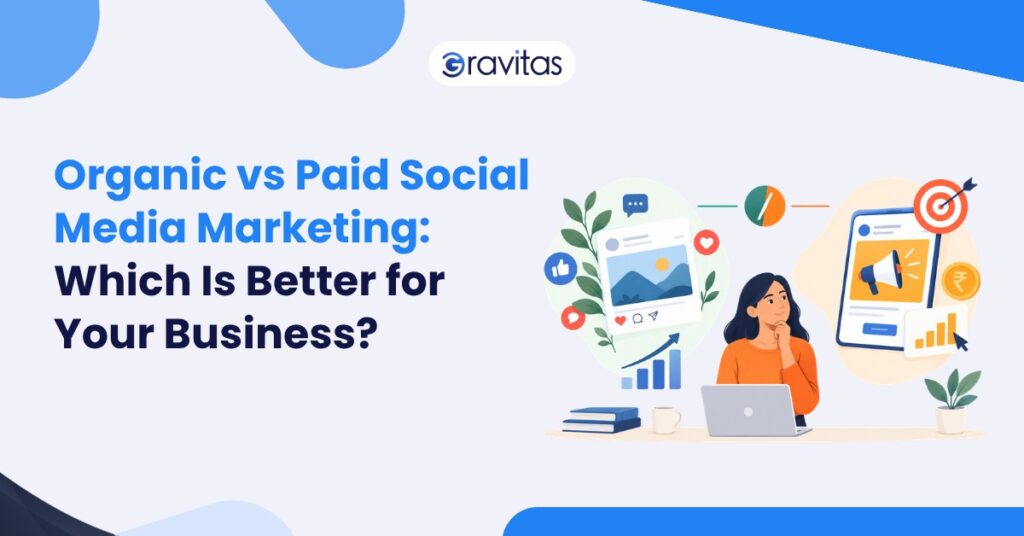
Organic Reach vs Paid Advertising
The choice between organic growth and social media advertising does not have to be either-or.
| Organic Social Media | Paid Social Media |
| Relies on content and audience interaction | Relies on advertising budget |
| Builds visibility over time | Can generate distribution quickly |
| Strong for education and brand building | Strong for targeted campaigns |
| Requires consistency | Requires ongoing budget |
| Performance can fluctuate | Distribution can be more predictable |
| Builds an owned community around the brand | Expands reach through paid placement |
A business launching a new product, for example, may use paid advertising to generate immediate awareness while continuing to publish organic content that answers customer questions and builds trust.
The strongest approach is often to use paid and organic channels for different jobs rather than expecting one to replace the other.
Why Your Social Media Reach Is Declining
If your posts used to reach 5,000 people and now struggle to reach 1,000, it is reasonable to ask, “Why is my social media reach declining?”
The answer isn’t necessarily that the platform is deliberately limiting your account.
Audience interests change. Competition increases. Your followers may become less active. Your content may become repetitive. Or your posts may simply stop generating the interactions they once did.
Creating Content Without Understanding Your Audience
One of the easiest ways to reduce reach is to create content based on what the business wants to say rather than what its audience wants to consume.
Consider a software company that publishes:
“Our platform has launched a new dashboard with advanced reporting capabilities.”
That may be important internally.
But a potential customer may care more about:
“Still spending hours every Monday building reports manually? Here’s what your reporting process could look like instead.”
The second version starts with a problem.
This is why audience research should influence your content topics, examples and messaging. Your target audience should be able to recognize themselves in the content.
Useful sources for audience research include:
- Customer questions
- Sales calls
- Support conversations
- Reviews
- Comments
- Search queries
- Competitor discussions
- Frequently asked questions
The closer your content is to a real audience problem, the easier it becomes to create something people want to engage with.
Low Engagement Signals
Reach and engagement influence each other.
When people consistently ignore your content, there is less evidence that the content is relevant to them. When people comment, share, save or otherwise interact, those actions provide stronger indications of interest.
This doesn’t mean every post needs thousands of likes.
A B2B post with 20 thoughtful comments from decision-makers may be more valuable than a post with 2,000 passive reactions.
Look beyond raw numbers and consider your engagement rate, as well as the quality of interactions.
Ask:
- Are people commenting because the topic matters?
- Are they sharing the post with colleagues?
- Are they saving useful information?
- Are conversations continuing in the comments?
- Are new people discovering the account?
This is where social media engagement becomes more meaningful than follower count alone.
Inconsistent Posting Schedule
Consistency doesn’t mean publishing three times a day.
It means establishing a social media posting schedule your team can realistically maintain.
A business that publishes useful content twice a week for a year can build a stronger content library than one that publishes every day for two weeks and then disappears.
Consistency also makes it easier to identify patterns.
If your content is published randomly, it becomes difficult to determine whether changes in reach came from the topic, format, timing or audience behavior.
Creating Promotional Content Only
Imagine following a company whose entire feed consists of:
“Buy our product.”
“Book a demo.”
“Limited-time offer.”
“Contact us today.”
Even if the product is good, there is little reason for someone to keep following the account.
Organic growth becomes easier when promotional posts are balanced with value-driven content.
That can include:
- Educational posts
- Industry insights
- Customer stories
- Behind-the-scenes content
- Practical advice
- Research findings
- Opinions
- FAQs
- Case studies
The goal is not to avoid selling. It is to give people reasons to pay attention before asking them to buy.
10 Proven Ways to Increase Organic Reach on Social Media
There is no single trick that guarantees organic reach. Sustainable growth usually comes from several improvements working together.
Here are ten ways businesses can increase social media reach organically.
1. Create High-Quality, Valuable Content
The foundation of social media organic growth is still the content itself.
But “high-quality” doesn’t necessarily mean highly produced.
A useful LinkedIn post explaining a common sales mistake can outperform an expensive corporate video. A simple Instagram carousel answering a customer question can generate more saves than a polished promotional graphic.
Focus on whether the content provides a clear reason to stop and consume it.
Three reliable categories are:
Educational content: Explain something your audience wants to understand.
Problem-solving content: Address a challenge your audience is actively experiencing.
Industry insight: Interpret a trend, change or development rather than simply repeating the news.
Before publishing, ask:
“What does the audience get from this?”
If the answer is unclear, the idea probably needs a stronger angle.
2. Optimize Your Content for Each Platform
One of the biggest mistakes businesses make is creating one post and distributing exactly the same version everywhere.
The subject can remain the same. The execution shouldn’t.
Instagram tends to reward visual storytelling, short-form video, carousels and highly accessible content.
LinkedIn is particularly suited to professional insights, experiences, industry perspectives and useful knowledge. LinkedIn states that its systems consider factors including what a post is about, whether it provides knowledge or advice, how people engage with it and how recent it is.
Facebook can work well for community-oriented posts, discussions, local audiences and shareable content.
The lesson is simple: don’t just change the logo and repost.
Build platform-specific content around the way people use each network.
3. Use Short-Form Video Content
Short-form videos have become an important discovery format across platforms.
Instagram Reels, YouTube Shorts and similar formats give businesses another way to reach people who may not already follow them.
But simply producing videos isn’t enough.
A useful short-form video needs a clear idea, an engaging opening and a reason to continue watching.
YouTube’s own guidance says Shorts recommendations consider viewer personalization and performance signals such as whether people choose to watch, average view duration and average percentage viewed.
That means social media video marketing should focus on audience interest rather than producing short videos simply because “video gets reach.”
Try formats such as:
- Quick explainers
- Customer problems
- Myth vs. fact
- Tutorials
- Industry opinions
- Behind-the-scenes videos
- Case-study snippets
- Frequently asked questions
4. Improve Engagement Through Conversations
Publishing a post and disappearing is one of the easiest ways to waste an opportunity.
When someone leaves a thoughtful comment, respond.
When your audience asks a question, answer it.
When a post generates disagreement, participate in the discussion.
Good audience interaction doesn’t mean replying “Thanks!” to every comment. It means giving people a reason to continue the conversation.
For example:
Comment:
“We’ve tried this approach, but it didn’t work.”
Weak response:
“Thanks for sharing!”
Better response:
“What part didn’t work for you may be the targeting, the content or the follow-up? That distinction can make a big difference.”
Now the comment becomes a conversation.
YouTube similarly recommends using comments and audience feedback to build community and identify topics worth exploring further.
5. Use Relevant Hashtags and Keywords
Hashtags can help provide context, but they should not become a substitute for relevance.
Using 20 broad hashtags doesn’t make a post valuable.
Instead, combine relevant:
- Industry terms
- Topic keywords
- Niche hashtags
- Audience-specific phrases
This is particularly important as social platforms increasingly function as discovery and search environments.
Think about what your audience might actually search for.
A cybersecurity company, for example, may benefit more from specific terms related to cybersecurity awareness, phishing prevention or data security than from generic tags such as #business or #success.
A thoughtful approach to social media SEO can make your content easier to understand and discover.
6. Post at the Right Time—But Don’t Obsess Over It
You will find plenty of articles claiming that Tuesday at 9:17 AM is the “best posting time.”
Treat those claims cautiously.
There is no universal posting time that guarantees reach for every business.
Your audience may be active at different times depending on its location, industry and daily routine.
Use social media analytics to understand when your own audience is most active, then test different publishing windows.
More importantly, don’t use timing to compensate for weak content.
A great post published at an average time can still outperform a weak post published at the “perfect” time.
7. Collaborate With Other Creators and Brands
Organic reach doesn’t have to come entirely from your existing audience.
A relevant collaboration can introduce your brand to people who have never encountered it before.
For example:
- A SaaS company can collaborate with an industry consultant.
- A fitness brand can work with a relevant creator.
- A local business can partner with another complementary business.
- A B2B company can co-create an expert discussion.
The important word is relevant.
A collaboration should make sense to both audiences.
Cross-promotion works best when the audiences have a genuine reason to care about each other’s content.
8. Repurpose High-Performing Content
You don’t need 30 completely new ideas every month.
Your existing content library may already tell you what your audience wants.
Suppose a blog post about customer retention performs particularly well.
You could turn that one idea into:
- A LinkedIn text post
- An Instagram carousel
- A short video
- A customer-question post
- A poll
- A newsletter section
- A case-study discussion
This is content repurposing, not simply copying and pasting.
Each version should be adapted to the platform and audience.
The benefit is twofold: you extend the life of strong ideas while giving your audience multiple ways to consume the same insight.
9. Analyze Performance Regularly
Organic growth becomes much more predictable when you stop treating every post as an isolated experiment.
Track metrics such as:
- Reach
- Engagement rate
- Shares
- Saves
- Comments
- Profile visits
- Website traffic
- Follower growth
- Leads or enquiries
Then compare similar content.
If educational posts consistently generate more saves than promotional posts, that’s a signal.
If videos generate reach but very few profile visits, that tells you something different.
If one topic repeatedly attracts comments from your ideal customers, you may have found a strong content pillar.
The objective isn’t to create a spreadsheet full of numbers. It is to turn performance tracking into decisions.
This is where social media should connect with your widerdigital marketing strategy rather than operate as an isolated channel.
10. Give People a Reason to Follow You
Reach gets someone to discover your content.
But what makes them stay?
A clear reason to follow.
Maybe your account consistently explains complex technology in simple language. Maybe it provides practical marketing insights. Maybe it shares useful industry analysis every week.
Whatever your positioning is, make it recognizable.
Ask:
“If someone sees three of our posts without seeing our logo, would they know they came from the same brand?”
Consistency in subject matter, perspective and voice helps turn one-time reach into an audience.
How Social Media Algorithms Support Organic Growth
Algorithms are often discussed as though they are working against businesses.
In reality, social platforms are trying to determine which content is most relevant to individual users.
LinkedIn, for example, says its systems use information about members and content to recommend material that may be useful, while considering factors such as engagement, the subject of a post, the value it provides and the user’s activity.
YouTube similarly explains that Shorts are personalized according to viewer interests and that recommendation systems consider performance and viewer response.
Across platforms, the exact systems differ, but several principles are useful when thinking about organic reach:
User interactions
What people do with your content provides information about its relevance.
Content relevance
The clearer the subject and audience, the easier it is to connect the content with interested users.
Watch time
For video, whether people continue watching can influence how platforms understand viewer interest.
Shares and saves
These actions can indicate that content has enough value for someone to keep or pass on.
Consistency
A sustainable publishing pattern helps businesses build a body of content and learn from repeated audience responses.
Rather than trying to reverse-engineer every algorithm change, focus on creating content that consistently earns attention from the people you want to reach.
For the most current information, it’s better to refer to the official social media platform guidelines and creator resources for the platforms you actively use. LinkedIn, for example, explicitly emphasizes content that adds value and contributes constructively to professional discussions.
Content Types That Increase Organic Social Media Reach
Different content formats serve different purposes. A strong social media content strategy usually combines several rather than relying on one format.
| Content Type | Primary Benefit |
| Educational Content | Builds authority and gives audiences useful information |
| Videos | Creates opportunities for stronger attention and engagement |
| User-Generated Content | Builds trust through real customer experiences |
| Behind-the-Scenes Content | Makes the brand more relatable |
| Case Studies | Demonstrates expertise through real outcomes |
| Industry Insights | Positions the brand around knowledge and perspective |
| Customer FAQs | Addresses real problems and search intent |
| Opinion-Based Content | Creates opportunities for discussion |
The best format depends on your audience.
A B2B consulting company may find that case studies and expert commentary outperform entertainment-focused videos. A consumer brand may see stronger results from short-form video and user-generated content.
The important thing is to identify the relationship between content type, audience response and business objective.
Common Mistakes That Reduce Organic Reach
Even businesses with good content can limit their own reach through poor execution.
Posting Without a Strategy
Publishing whatever idea comes to mind makes it difficult to build a recognizable position.
A planned content calendar helps balance educational, promotional, community and authority-building content.
Ignoring Comments
If people take the time to respond and the brand never participates, the opportunity for conversation disappears.
Comments can also provide your next month’s content ideas.
Copying Competitors
Competitor research can show you what topics are receiving attention.
But copying their posts gives your audience little reason to choose you.
Use competitor content to identify gaps, then bring your own expertise and perspective.
Using Too Many Promotional Posts
If every post asks people to buy, book, call or enquire, your audience has little reason to engage between sales messages.
Build value first.
Not Analyzing Results
Without analytics, you’re relying on assumptions.
The post you thought would perform well may not.
The post you almost didn’t publish may become your best-performing content.
That is why a structured content marketing strategy should include not only planning and publishing, but also measurement and refinement.
How Businesses Can Build a Sustainable Organic Growth Strategy
Organic social media marketing becomes more effective when it moves from random posting to a repeatable system.
Start With Clear Goals
Don’t begin with:
“We need more followers.”
Ask what those followers should ultimately contribute to the business.
Your goal might be:
- Brand awareness
- Website traffic
- Lead generation
- Community building
- Thought leadership
- Customer retention
Your goal determines what you should measure.
Understand Your Audience
Define who you are trying to reach and what they care about.
Document:
- Common problems
- Questions
- Objections
- Interests
- Buying triggers
- Preferred content formats
This gives your team a foundation for creating relevant content.
Build Content Pillars
Instead of deciding what to post every morning, establish a few recurring themes.
For example, a B2B technology company might use:
Education → Industry Insights → Customer Problems → Case Studies → Brand Stories
Now individual posts have a purpose.
Create a Content Calendar
A content calendar should not simply list dates and captions.
It should show:
- Topic
- Platform
- Content format
- Target audience
- Objective
- CTA
- Publishing date
- Performance
This makes it easier to identify gaps and maintain content consistency.
Measure What Matters
Track performance against the original objective.
If awareness is the goal, look at reach and discovery.
If engagement is the goal, look at meaningful interactions.
If lead generation is the goal, connect social activity with website traffic, enquiries and conversions.
Improve Continuously
Your first strategy won’t be perfect.
That’s normal.
The advantage of organic marketing is that every post gives you information.
One topic performs well.
Test another angle.
A format underperforms.
Change the format.
A particular audience segment responds strongly.
Create more content for that segment.
That feedback loop is what turns a collection of social posts into a real social media growth strategy.
Conclusion
Building organic social media reach is less about finding a secret algorithm trick and more about becoming consistently useful to a clearly defined audience.
Businesses that want to increase social media reach organically need to focus on the fundamentals: understand their audience, create valuable content, adapt it to each platform, participate in conversations and use performance data to improve the next piece of content.
Follower count may tell you how large your audience is, but it doesn’t tell you how valuable that audience is. A smaller community that actively engages, shares your content and trusts your expertise can contribute more to a business than thousands of inactive followers.
Organic growth also takes time. There will be posts that underperform, formats that stop working and changes in audience behavior that require you to rethink your approach. The businesses that continue learning from those signals are the ones more likely to build sustainable visibility.
Ultimately, successful social media content strategy is not about publishing more. It is about making each piece of content more relevant, useful and intentional than the last.
Need help building a social media strategy that increases organic reach and engagement? Contact our team to create a customized growth plan for your business.
Frequently Asked Questions
Start with audience-focused content, platform-specific formats and consistent publishing. Improve engagement by responding to your audience, use relevant keywords and hashtags, and review analytics regularly to identify what content is earning reach.
Low reach can result from several factors, including weak audience relevance, inconsistent publishing, repetitive content, low engagement or poor platform fit. Review your recent posts for patterns rather than assuming there is one cause.
Create content that solves problems for a specific audience, encourage meaningful conversations, collaborate with relevant creators or brands, and make your profile’s value proposition clear. Growing followers organically takes time, but attracting the right followers is more valuable than simply increasing the number.
Educational content, practical advice, original insights, case studies, customer stories and discussion-worthy opinions can all generate engagement when they are relevant to the audience. The strongest format varies by platform and business.
There is no universal posting frequency. Choose a schedule that your business can maintain consistently while keeping content quality high. YouTube’s own guidance for Shorts similarly emphasizes a sustainable upload schedule rather than a universal minimum posting cadence.
Yes. Businesses can build organic visibility through useful content, audience engagement, collaborations, search-friendly content and consistent publishing. Paid advertising can accelerate distribution, but it is not a requirement for building an organic audience.
There is no universally best platform. The right choice depends on your audience, industry, content format and business objective. A B2B company may find LinkedIn particularly valuable, while a visually driven consumer brand may perform better on Instagram or YouTube.